Elon Musk Worries That AI Research Will Create an ‘Immortal Dictator’

By Brandon Specktor

Imagine your least-favorite world leader. (Take as much time as you need.)

Now, imagine if that person wasn’t a human, but a network of millions of computers around the world. This digi-dictator has instant access to every scrap of recorded information about every person who’s ever lived. It can make millions of calculations in a fraction of a second, controls the world’s economy and weapons systems with godlike autonomy and — scariest of all — can never, ever die.

This unkillable digital dictator, according to Tesla and SpaceX founder Elon Musk, is one of the darker scenarios awaiting humankind’s future if artificial-intelligence research continues without serious regulation.

“We are rapidly headed toward digital superintelligence that far exceeds any human, I think it’s pretty obvious,” Musk said in a new AI documentary called “Do You Trust This Computer?” directed by Chris Paine (who interviewed Musk previously for the documentary “Who Killed The Electric Car?”). “If one company or a small group of people manages to develop godlike digital super-intelligence, they could take over the world.”

Humans have tried to take over the world before. However, an authoritarian AI would have one terrible advantage over like-minded humans, Musk said.

“At least when there’s an evil dictator, that human is going to die,” Musk added. “But for an AI there would be no death. It would live forever, and then you’d have an immortal dictator, from which we could never escape.”

And, this hypothetical AI-dictator wouldn’t even have to be evil to pose a threat to humans, Musk added. All it has to be is determined.

“If AI has a goal and humanity just happens to be in the way, it will destroy humanity as a matter of course without even thinking about it. No hard feelings,” Musk said. “It’s just like, if we’re building a road, and an anthill happens to be in the way. We don’t hate ants, we’re just building a road. So, goodbye, anthill.”

Those who follow news from the Musk-verse will not be surprised by his opinions in the new documentary; the tech mogul has long been a vocal critic of unchecked artificial intelligence. In 2014, Musk called AI humanity’s “biggest existential threat,” and in 2015, he joined a handful of other tech luminaries and researchers, including Stephen Hawking, to urge the United Nations to ban killer robots. He has said unregulated AI poses “vastly more risk than North Korea” and proposed starting some sort of federal oversight program to monitor the technology’s growth.

“Public risks require public oversight,” he tweeted. “Getting rid of the FAA [wouldn’t] make flying safer. They’re there for good reason.”

https://www.livescience.com/62239-elon-musk-immortal-artificial-intelligence-dictator.html?utm_source=notification

New research shows that human make lots of new nerve cells in the brain well into old age.


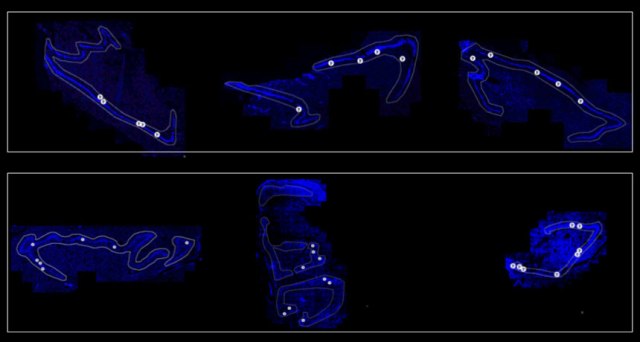
Roughly the same number of new nerve cells (dots) exist in the hippocampus of people in their 20s (three hippocampi shown, top row) as in people in their 70s (bottom). Blue marks the dentate gyrus, where new nerve cells are born.

BY LAUREL HAMERS

Healthy people in their 70s have just as many young nerve cells, or neurons, in a memory-related part of the brain as do teenagers and young adults, researchers report in the April 5 Cell Stem Cell. The discovery suggests that the hippocampus keeps generating new neurons throughout a person’s life.

The finding contradicts a study published in March, which suggested that neurogenesis in the hippocampus stops in childhood (SN Online: 3/8/18). But the new research fits with a larger pile of evidence showing that adult human brains can, to some extent, make new neurons. While those studies indicate that the process tapers off over time, the new study proposes almost no decline at all.

Understanding how healthy brains change over time is important for researchers untangling the ways that conditions like depression, stress and memory loss affect older brains.

When it comes to studying neurogenesis in humans, “the devil is in the details,” says Jonas Frisén, a neuroscientist at the Karolinska Institute in Stockholm who was not involved in the new research. Small differences in methodology — such as the way brains are preserved or how neurons are counted — can have a big impact on the results, which could explain the conflicting findings. The new paper “is the most rigorous study yet,” he says.

Researchers studied hippocampi from the autopsied brains of 17 men and 11 women ranging in age from 14 to 79. In contrast to past studies that have often relied on donations from patients without a detailed medical history, the researchers knew that none of the donors had a history of psychiatric illness or chronic illness. And none of the brains tested positive for drugs or alcohol, says Maura Boldrini, a psychiatrist at Columbia University. Boldrini and her colleagues also had access to whole hippocampi, rather than just a few slices, allowing the team to make more accurate estimates of the number of neurons, she says.

To look for signs of neurogenesis, the researchers hunted for specific proteins produced by neurons at particular stages of development. Proteins such as GFAP and SOX2, for example, are made in abundance by stem cells that eventually turn into neurons, while newborn neurons make more of proteins such as Ki-67. In all of the brains, the researchers found evidence of newborn neurons in the dentate gyrus, the part of the hippocampus where neurons are born.

Although the number of neural stem cells was a bit lower in people in their 70s compared with people in their 20s, the older brains still had thousands of these cells. The number of young neurons in intermediate to advanced stages of development was the same across people of all ages.

Still, the healthy older brains did show some signs of decline. Researchers found less evidence for the formation of new blood vessels and fewer protein markers that signal neuroplasticity, or the brain’s ability to make new connections between neurons. But it’s too soon to say what these findings mean for brain function, Boldrini says. Studies on autopsied brains can look at structure but not activity.

Not all neuroscientists are convinced by the findings. “We don’t think that what they are identifying as young neurons actually are,” says Arturo Alvarez-Buylla of the University of California, San Francisco, who coauthored the recent paper that found no signs of neurogenesis in adult brains. In his study, some of the cells his team initially flagged as young neurons turned out to be mature cells upon further investigation.

But others say the new findings are sound. “They use very sophisticated methodology,” Frisén says, and control for factors that Alvarez-Buylla’s study didn’t, such as the type of preservative used on the brains.

M. Boldrini et al. Human hippocampal neurogenesis persists throughout aging. Cell Stem Cell. Vol. 22, April 5, 2018, p. 589. doi:10.1016/j.stem.2018.03.015.

S.F. Sorrells et al. Human hippocampal neurogenesis drops sharply in children to undetectable levels in adults. Nature. Vol. 555, March 15, 2018, p. 377. doi: 10.1038/nature25975.

Human brains make new nerve cells — and lots of them — well into old age

Train Carrying 10 Million Pounds of Human Feces Has Been Stranded in Alabama Town For Months

Right now, dozens of train cars carrying 10 million pounds of poop are stranded in a rural Alabama rail yard. Technically it’s biowaste, but to the 982 residents in the small town of Parrish, that’s just semantics.

They want it gone. The load has been there for almost two months, and it’s making the whole place smell like a rotting animal carcass.

To add insult to injury, it isn’t even their poop. For the last year, waste management facilities in New York and one in New Jersey have been shipping tons of biowaste — literally, tons — to Big Sky Environmental, a private landfill in Adamsville, Alabama. But in January, the neighboring town of West Jefferson filed an injunction against Big Sky to keep the sludge from being stored in a nearby rail yard.

It was successful — but as a result, the poo already in transit got moved to Parrish, where there are no zoning laws to prevent the waste from being stored.

‘God help us if it gets hot’

Parrish Mayor Heather Hall said she is doing everything in her power to get the feculent freight out of her town.

“It’s so frustrating,” Hall said. Last week, Hall met with Alabama Gov. Kay Ivey, and she and other Montgomery lawmakers told Hall they would help get it sorted out. “They’re trying to work behind the scenes to get us a little bit of help, but we’ve been told that for weeks, and there’s still no solution.”

Hall said the stench permeates everything. The rail yard is across from a baseball field and next to a softball field. Parrish only measures about 2 square miles, and pretty much everything is within smelling distance.

“It greatly reduces the quality of life,” Hall said. “You can’t sit out on your porch. Kids can’t go outside and play, and God help us if it gets hot and this material is still out here.” On Tuesday, when Hall spoke to CNN, the temperature in Parrish reached 81 degrees.

“You can’t open your door because that stuff gets in your house. It’s really rough,” Parrish resident Robert Hall told CNN affiliate WVTM. Other residents said the waste smelled like dead bodies.

‘Is that not a public health issue?’

The Environmental Protection Agency and the Alabama Department of Environmental Management have both told Hall the material isn’t dangerous, because it’s supposed to be Grade A biowaste, not raw sewage (which is also the reason for the unique smell).

She’s willing to take them at their word, but that doesn’t mean she and other Parrish residents aren’t concerned.

“Other than it smelling absolutely terrible, I have to trust them that it’s not going to hurt you,” she said. “But if you have asthma or COPD or breathing problems, what is that going to do to you? [The rail yard] is probably less than 50 yards away from homes. What happens if flies get into someone’s house? Is that not a public health issue?”

Hall said her colleagues in the capital city of Montgomery have asked her not to file an injunction against the landfill, not that it would be a smart idea anyway; if they went to court over the matter, the other matter would just sit there, stinking up Parrish, until the trial was over.

‘They keep telling us the situation is almost over’

So, in short, nobody knows when the poop will be moved.

“I’m just getting little bits and pieces of information, and I cannot tell you how frustrating it is,” Hall said. “My understanding is, they are really trying to work on the problem, and they keep telling us the situation is almost over.”

Hall hasn’t been in contact with Big Sky for a few weeks. When she first spoke to the company, when the cars of waste were just beginning to be stockpiled in Parrish’s rail yard, they told her it would take seven to 10 days to move them out. That was two months ago.

CNN contacted Big Sky and is waiting to receive comment.

Parrish isn’t the only town on the waste route that has been dealing with the fetid fallout. According to AL.com, residents in Birmingham were livid when at least 80 train cars full of the sludge came to a stop in their city in January.

Hall said, at one point, there were 252 tractor-trailer loads of the stuff stockpiled in her town.

“People need to understand that this waste does not need to be in a populated area,” she said. “There are places to put it, industrial places. We’re a very small town caught in the middle of this, and I feel like that’s part of the issue here. This shouldn’t be happening.”

Train Carrying 10 Million Pounds of Human Feces Has Been Stranded in Alabama Town For Months

Thanks to Teresa Lindley for bringing this to the It’s Interesting Community.

Zombie-Like’ Raccoons Standing on Their Hind Legs Are Terrorizing a Town in Ohio

By MELISSA LOCKER

“Zombie-like” raccoons have taken over an Ohio town. This isn’t the inevitable re-boot of Night of the Living Dead, though, or another Walking Dead spin-off. Instead, it’s an eery invasion that has authorities looking for answers.

Police in Youngstown, Ohio, have responded to over a dozen calls from concerned humans who have spotted raccoons behaving very strangely, according to local news outlet WKBN. The raccoons were seen popping up onto their hind legs, baring their teeth, and then falling over in a comatose state. The animals weren’t easy to scare off, either, and seemed to have lost their natural fear of humans. If that wasn’t odd enough, the majority of the sightings and calls happened in the daytime even though raccoons are nocturnal.

Police received calls about 14 raccoons over the past three weeks, with some of the residents making the zombie comparison. The Ohio Department of Natural Resources said it doesn’t sound like rabies, but rather a disease called distemper. If this diagnosis is correct, distemper is not transmissible to humans, but can be spread to dogs who come in contact with zombie raccoons.

According to the American Veterinary Medical Association, distemper “attacks the respiratory, gastrointestinal and nervous systems” of infected animals and symptoms include, “head tilt, muscle twitches … seizures, and partial or complete paralysis.” Unfortunately, the affected raccoons have to be captured and put down to prevent the disease from spreading further.

http://time.com/5229420/zombie-raccoons-ohio-police-reports/

Lab mini-brains now growing their own blood vasculature systems

THE FIRST HUMAN brain balls—aka cortical spheroids, aka neural organoids—agglomerated into existence just a few short years ago. In the beginning, they were almost comically crude: just stem cells, chemically coerced into proto-neurons and then swirled into blobs in a salty-sweet bath. But still, they were useful for studying some of the most dramatic brain disorders, like the microcephaly caused by the Zika virus.

Then they started growing up. The simple spheres matured into 3D structures, fusing with other types of brain balls and sparking with electricity. The more like real brains they became, the more useful they were for studying complex behaviors and neurological diseases beyond the reach of animal models. And now, in their most human act yet, they’re starting to bleed.

Neural organoids don’t yet, even remotely, resemble adult brains; developmentally, they’re just pushing second trimester tissue organization. But the way Ben Waldau sees it, brain balls might be the best chance his stroke patients have at making a full recovery—and a homegrown blood supply is a big step toward that far-off goal. A blood supply carries oxygen and nutrients, allowing brain balls to grow bigger, complex networks of tissues, those that a doctor could someday use to shore up malfunctioning neurons.

“The whole idea with these organoids is to one day be able to develop a brain structure the patient has lost made with the patient’s own cells,” says Waldau, a vascular neurosurgeon at UC Davis Medical Center. “We see the injuries still there on the CT scans, but there’s nothing we can do. So many of them are left behind with permanent neural deficits—paralysis, numbness, weakness—even after surgery and physical therapy.”

Last week, it was Waldau’s group at UC Davis that published the first results of vascularized human neural organoids. Using brain membrane cells taken from one of his patients during a routine surgery, the team coaxed them first into stem cells, then some of them into the endothelial cells that line blood vessels’ insides. The stem cells they grew into brain balls, which they incubated in a gel matrix coated with those endothelial cells. After incubating for three weeks, they took a single organoid and transplanted it into a tiny cavity carefully carved into a mouse’s brain. Two weeks later the organoid was alive, well—and, critically, had grown capillaries that penetrated all the way to its inner layers.

Waldau got the idea from his work treating a rare disorder called Moyamoya disease. Patients have blocked arteries at the base of their brain, keeping blood from reaching the rest of the organ. “We sometimes lay a patient’s own artery on top of the brain to get the blood vessels to start growing in,” says Waldau. “When we replicated that process on a miniaturized scale we saw these vessels self-assemble.”

While it wasn’t clear from this experiment whether or not there was rodent blood coursing through its capillaries—the scientists had to flush them to accomplish fluorescent staining—the UC Davis team did demonstrate that the blood vessels themselves were comprised of human cells. Other research groups at the Salk Institute and the University of Pennsylvania have successfully transplanted human organoids into the brains of mice, but in both cases, blood vessels from the rodent host spontaneously grew into the transplanted tissue. When brain balls make their own blood vessels, they can potentially live much longer by hooking them up to microfluidic pumps—no rodent required.

That might give them a chance to actually mature into a complex computational organ. “It’s a big deal,” says Christof Koch, president of the Allen Institute for Brain Science in Seattle, “but it’s still early days.” The next problem will be getting these cells wired into circuits that can receive and process information. “The fact that I can look out at the world and see it as spatially organized—left, right, near, far— is all due to the organization of my cortex that reflects the regularity of the world,” says Koch. “There’s nothing like that in these organoids yet.”

Not yet, maybe, but it’s not too soon to start asking what happens when they do. How large do they have to be before society has a moral mandate to provide them some kind of special protections? If an organoid comes from your cells, are you then its legal guardian? Can a brain ball give its consent to be studied?

Just last week the National Institutes of Health convened a neuroethics workshop to confront some of these thorny questions. Addressing a room filled with neuroscientists, doctors, and philosophers, Walter Koroshetz, director of the NIH’s National Institute of Neurological Disorders and Stroke, said the time for involving the public was now, even if the technology takes a century to become reality. “The question here is, as those cells come together to form information processing units, when do they get to the point where they’re as good as what we do now in a mouse? When does it go beyond that, to information processing you only see in a human? And what type of information processing would be to a point where you would say, ‘I don’t think we should go there’?”

https://www.wired.com/story/mini-brains-just-got-creepiertheyre-growing-their-own-veins/

Caloric Restriction Slows Signs of Aging in Humans


by Diana Kwon

Findings from a randomized, controlled trial finds that reducing food intake decreases metabolism and reduces oxidative damage to tissues and cells.

Studies in various animals, including rodents and monkeys, have reported that caloric restriction can extend their lifespans. Findings from a two-year, randomized, controlled trial with human participants, published last week (March 22) in Cell Metabolism, suggest that cutting down on calories may also be able to prolong the lives of people.

To investigate the effects of reducing food intake, Leanne Redman, an endocrinologist at the Pennington Biomedical Research Center at Louisiana State University, and her colleagues enrolled 53 healthy men and women between the ages of 21 and 50 and split them into two groups—one group reduced their caloric intake by 15 percent over two years, and the other remained on a regular diet.

The team found that the people who ate a restricted diet lost an average of around 9 kilograms and experienced a 10-percent drop in their resting metabolic rates. When the researchers examined the participants’ blood, they also found a reduction in markers of oxidative stress in those who cut down on calories. “After two years, the lower rate of metabolism and level of calorie restriction was linked to a reduction in oxidative damage to cells and tissues,” Redman tells Wired.

“[I]f by-products of metabolism accelerate aging processes, calorie restriction sustained over several years may help to decrease risk for chronic disease and prolong life,” Redman says in a statement.

This study was part of a larger, multi-center investigation of caloric restriction in humans, the Comprehensive Assessment of Long-Term Effects of Reducing Intake of Energy (CALERIE) trial. Luigi Fontana, an internist who ran a CALERIE investigation at Washington University in St. Louis, says that a slower metabolism and reduced oxidative stress will not necessarily lead to a longer life. “You can have a low resting metabolic rate because you’re dying of starvation,” he tells Wired. “Does that make it a biomarker of longevity? No. You can be calorie restricted by eating half a hamburger and a few fries each day but will you live longer? No, you will die of malnutrition.”

https://www.the-scientist.com/?articles.view/articleNo/52141/title/Caloric-Restriction-Slows-Signs-of-Aging-in-Humans/

Brain waves of concertgoers sync up at shows

BY RACHEL EHRENBERG

Getting your groove on solo with headphones on might be your jam, but it can’t compare with a live concert. Just ask your brain. When people watch live music together, their brains waves synchronize, and this brain bonding is linked with having a better time.

The new findings, reported March 27 at a Cognitive Neuroscience Society meeting, are a reminder that humans are social creatures. In western cultures, performing music is generally reserved for the tunefully talented, but this hasn’t been true through much of human history. “Music is typically linked with ritual and in most cultures is associated with dance,” said neuroscientist Jessica Grahn of Western University in London, Canada. “It’s a way to have social participation.”

Study participants were split into groups of 20 and experienced music in one of three ways. Some watched a live concert with a large audience, some watched a recording of the concert with a large audience, and some watched the recording with only a few other people. Each person wore EEG caps, headwear covered with electrodes that measure the collective behavior of the brain’s nerve cells. The musicians played an original song they wrote for the study.

The delta brain waves of audience members who watched the music live were more synchronized than those of people in the other two groups. Delta brain waves fall in a frequency range that roughly corresponds to the beat of the music, suggesting that beat drives the synchronicity, neuroscientist Molly Henry, a member of Grahn’s lab, reported. The more synchronized a particular audience member was with others, the more he or she reported feeling connected to the performers and enjoying the show.

Brain waves of concertgoers sync up at shows

IBM’s newest computer costs 10 cents and 1 X 1 millimeter

by Edd Gent

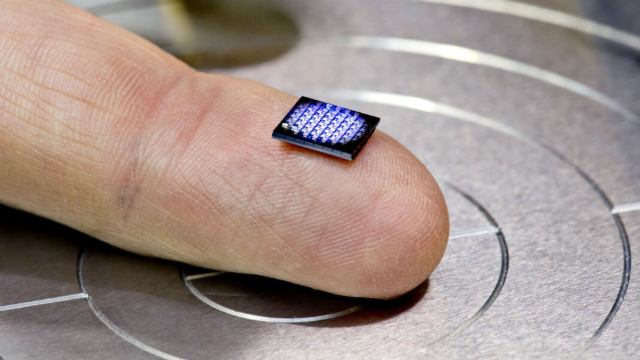
The miniaturization of electronics has been progressing steadily for decades, but IBM just took a major leap. The company has created what it’s calling the world’s smallest computer, and it’s the size of a grain of salt.

The 1 millimeter x 1 millimeter device was unveiled at the computing giant’s IBM Think 2018 conference. Despite its diminutive size, the company claims the computer has the same amount of power as an x86 chip from 1990, which The Verge points out means it’s probably just about powerful enough to play the computer game Doom.

Unsurprisingly, though, IBM has bigger plans for it than that. The company sees the tiny computer becoming a crucial element of attempts to apply blockchain to supply chain management by collecting, processing, and communicating data on goods being shipped around the country.

To enable this, the device features a processor with “several hundred thousand” transistors, SRAM memory, a communications unit that consists of an LED that can send messages by blinking, and a photodetector that can pick up optical signals. Plugging such a tiny device into the mains is clearly not feasible, so it comes with a photovoltaic cell to power it.

Costing less than 10 cents to manufacture, the company envisions the device being embedded into products as they move around the supply chain. The computer’s sensing, processing, and communicating capabilities mean it could effectively turn every item in the supply chain into an Internet of Things device, producing highly granular supply chain data that could streamline business operations.

But more importantly, the computer could be a critical element of IBM’s efforts to apply blockchain technology to the supply chain. The company is going all in on the technology and is working with a number of large companies to use the computer to tackle everything from food supply to insurance. This week they also launched a simpler and cheaper “blockchain starter plan” aimed at start-ups and those just beginning to experiment with the technology.

Supply chain management is one of the killer apps for the technology. Blockchain is essentially a distributed ledger that can be used to track everything from transactions to inventory. Identical copies of the ledger are kept on all computers participating in the network.

Every time a new record, or block, is added to the ledger, it includes a cryptographic hash that links it back to the previous block, creating an uninterrupted chain that can be followed all the way back to the first block. Once a new block has been added to the chain all of the participants get an updated copy of the ledger, so it’s nearly impossible to tamper with, as you’d have to edit all the copies simultaneously.

The benefits of this approach are enormous for supply chain management. Previously, you’d have multiple stakeholders from suppliers to couriers to clients all using different ways of tracking items, processes, and transactions. With the blockchain all of this can be recorded in a shared ledger that updates in real time, provides every participant with the same visibility, and is entirely traceable.

Unlike tracking banking transactions or contracts, though, for the approach to work for supply chain it needs to be able to interact with the physical goods themselves. That’s where IBM’s tiny computer comes in.

The company has been working on what it calls crypto-anchors, which it describes as “tamper-proof digital fingerprints, to be embedded into products, or parts of products, and linked to the blockchain.”

These anchors carry a cryptographic message linked back to the blockchain that can be used to identify and authenticate the product. This message can be encoded in various ways; another approach the company has investigated is using edible magnetic ink to create patterns of colored dots on medicines.

But the benefit of the mini computer is that it can also collect and analyze data as it passes through the supply chain. That means as well as helping verify the product’s provenance, it could potentially give stakeholders insight into how it’s been handled or whether there’s been any attempt to tamper with it.

The tiny computer is currently a prototype, and there’s still little detail on how exactly the computer will be linked to the blockchain. But the company says it plans to start rolling out its crypto-anchor solution in the next 18 months. So keep an eye out—it may not be long before the world’s smallest computer is delivered to your door.

IBM’s New Computer Is the Size of a Grain of Salt and Costs Less Than 10 Cents

Startup Nectome is pitching a mind-uploading service that is “100 percent fatal”

by Antonio Regalado

The startup accelerator Y Combinator is known for supporting audacious companies in its popular three-month boot camp.

There’s never been anything quite like Nectome, though.

Next week, at YC’s “demo days,” Nectome’s cofounder, Robert McIntyre, is going to describe his technology for exquisitely preserving brains in microscopic detail using a high-tech embalming process. Then the MIT graduate will make his business pitch. As it says on his website: “What if we told you we could back up your mind?”

So yeah. Nectome is a preserve-your-brain-and-upload-it company. Its chemical solution can keep a body intact for hundreds of years, maybe thousands, as a statue of frozen glass. The idea is that someday in the future scientists will scan your bricked brain and turn it into a computer simulation. That way, someone a lot like you, though not exactly you, will smell the flowers again in a data server somewhere.

This story has a grisly twist, though. For Nectome’s procedure to work, it’s essential that the brain be fresh. The company says its plan is to connect people with terminal illnesses to a heart-lung machine in order to pump its mix of scientific embalming chemicals into the big carotid arteries in their necks while they are still alive (though under general anesthesia).

The company has consulted with lawyers familiar with California’s two-year-old End of Life Option Act, which permits doctor-assisted suicide for terminal patients, and believes its service will be legal. The product is “100 percent fatal,” says McIntyre. “That is why we are uniquely situated among the Y Combinator companies.”

There’s a waiting list

Brain uploading will be familiar to readers of Ray Kurzweil’s books or other futurist literature. You may already be convinced that immortality as a computer program is definitely going to be a thing. Or you may think transhumanism, the umbrella term for such ideas, is just high-tech religion preying on people’s fear of death.

Either way, you should pay attention to Nectome. The company has won a large federal grant and is collaborating with Edward Boyden, a top neuroscientist at MIT, and its technique just claimed an $80,000 science prize for preserving a pig’s brain so well that every synapse inside it could be seen with an electron microscope.

McIntyre, a computer scientist, and his cofounder Michael McCanna have been following the tech entrepreneur’s handbook with ghoulish alacrity. “The user experience will be identical to physician-assisted suicide,” he says. “Product-market fit is people believing that it works.”

Nectome’s storage service is not yet for sale and may not be for several years. Also still lacking is evidence that memories can be found in dead tissue. But the company has found a way to test the market. Following the example of electric-vehicle maker Tesla, it is sizing up demand by inviting prospective customers to join a waiting list for a deposit of $10,000, fully refundable if you change your mind.

So far, 25 people have done so. One of them is Sam Altman, a 32-year-old investor who is one of the creators of the Y Combinator program. Altman tells MIT Technology Review he’s pretty sure minds will be digitized in his lifetime. “I assume my brain will be uploaded to the cloud,” he says.

Old idea, new approach

The brain storage business is not new. In Arizona, the Alcor Life Extension Foundation holds more than 150 bodies and heads in liquid nitrogen, including those of baseball great Ted Williams. But there’s dispute over whether such cryonic techniques damage the brain, perhaps beyond repair.

So starting several years ago, McIntyre, then working with cryobiologist Greg Fahy at a company named 21st Century Medicine, developed a different method, which combines embalming with cryonics. It proved effective at preserving an entire brain to the nanometer level, including the connectome—the web of synapses that connect neurons.

A connectome map could be the basis for re-creating a particular person’s consciousness, believes Ken Hayworth, a neuroscientist who is president of the Brain Preservation Foundation—the organization that, on March 13, recognized McIntyre and Fahy’s work with the prize for preserving the pig brain.

There’s no expectation here that the preserved tissue can be actually brought back to life, as is the hope with Alcor-style cryonics. Instead, the idea is to retrieve information that’s present in the brain’s anatomical layout and molecular details.

“If the brain is dead, it’s like your computer is off, but that doesn’t mean the information isn’t there,” says Hayworth.

A brain connectome is inconceivably complex; a single nerve can connect to 8,000 others, and the brain contains millions of cells. Today, imaging the connections in even a square millimeter of mouse brain is an overwhelming task. “But it may be possible in 100 years,” says Hayworth. “Speaking personally, if I were a facing a terminal illness I would likely choose euthanasia by [this method].”

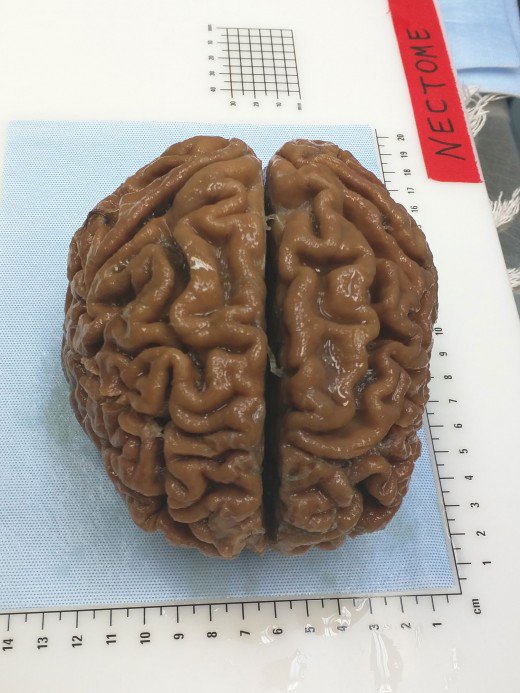
A human brain

The Nectome team demonstrated the seriousness of its intentions starting this January, when McIntyre, McCanna, and a pathologist they’d hired spent several weeks camped out at an Airbnb in Portland, Oregon, waiting to purchase a freshly deceased body.

In February, they obtained the corpse of an elderly woman and were able to begin preserving her brain just 2.5 hours after her death. It was the first demonstration of their technique, called aldehyde-stabilized cryopreservation, on a human brain.

Fineas Lupeiu, founder of Aeternitas, a company that arranges for people to donate their bodies to science, confirmed that he provided Nectome with the body. He did not disclose the woman’s age or cause of death, or say how much he charged.

The preservation procedure, which takes about six hours, was carried out at a mortuary. “You can think of what we do as a fancy form of embalming that preserves not just the outer details but the inner details,” says McIntyre. He says the woman’s brain is “one of the best-preserved ever,” although her being dead for even a couple of hours damaged it. Her brain is not being stored indefinitely but is being sliced into paper-thin sheets and imaged with an electron microscope.

McIntyre says the undertaking was a trial run for what the company’s preservation service could look like. He says they are seeking to try it in the near future on a person planning doctor-assisted suicide because of a terminal illness.

Hayworth told me he’s quite anxious that Nectome refrain from offering its service commercially before the planned protocol is published in a medical journal. That’s so “the medical and ethics community can have a complete round of discussion.”

“If you are like me, and think that mind uploading is going to happen, it’s not that controversial,” he says. “But it could look like you are enticing someone to commit suicide to preserve their brain.” He thinks McIntyre is walking “a very fine line” by asking people to pay to join a waiting list. Indeed, he “may have already crossed it.”

Crazy or not ?

Some scientists say brain storage and reanimation is an essentially fraudulent proposition. Writing in our pages in 2015, the McGill University neuroscientist Michael Hendricks decried the “abjectly false hope” peddled by transhumanists promising resurrection in ways that technology can probably never deliver.

“Burdening future generations with our brain banks is just comically arrogant. Aren’t we leaving them with enough problems?” Hendricks told me this week after reviewing Nectome’s website. “I hope future people are appalled that in the 21st century, the richest and most comfortable people in history spent their money and resources trying to live forever on the backs of their descendants. I mean, it’s a joke, right? They are cartoon bad guys.”

Nectome has received substantial support for its technology, however. It has raised $1 million in funding so far, including the $120,000 that Y Combinator provides to all the companies it accepts. It has also won a $960,000 federal grant from the U.S. National Institute of Mental Health for “whole-brain nanoscale preservation and imaging,” the text of which foresees a “commercial opportunity in offering brain preservation” for purposes including drug research.

About a third of the grant funds are being spent in the MIT laboratory of Edward Boyden, a well-known neuroscientist. Boyden says he’s seeking to combine McIntyre’s preservation procedure with a technique MIT invented, expansion microscopy, which causes brain tissue to swell to 10 or 20 times its normal size, and which facilitates some types of measurements.

I asked Boyden what he thinks of brain preservation as a service. “I think that as long as they are up-front about what we do know and what we don’t know, the preservation of information in the brain might be a very useful thing,” he replied in an e-mail.

The unknowns, of course, are substantial. Not only does no one know what consciousness is (so it will be hard to tell if an eventual simulation has any), but it’s also unclear what brain structures and molecular details need to be retained to preserve a memory or a personality. Is it just the synapses, or is it every fleeting molecule? “Ultimately, to answer this question, data is needed,” Boyden says.

Demo day

Nectome has been honing its pitch for Y Combinator’s demo days, trying to create a sharp two-minute summary of its ideas to present to a group of elite investors. The team was leaning against showing an image of the elderly woman’s brain. Some people thought it was unpleasant. The company had also walked back its corporate slogan, changing it from “We archive your mind” to “Committed to the goal of archiving your mind,” which seemed less like an overpromise.

McIntyre sees his company in the tradition of “hard science” startups working on tough problems like quantum computing. “Those companies also can’t sell anything now, but there is a lot of interest in technologies that could be revolutionary if they are made to work,” he says. “I do think that brain preservation has amazing commercial potential.”

He also keeps in mind the dictum that entrepreneurs should develop products they want to use themselves. He sees good reasons to save a copy of himself somewhere, and copies of other people, too.

“There is a lot of philosophical debate, but to me a simulation is close enough that it’s worth something,” McIntyre told me. “And there is a much larger humanitarian aspect to the whole thing. Right now, when a generation of people die, we lose all their collective wisdom. You can transmit knowledge to the next generation, but it’s harder to transmit wisdom, which is learned. Your children have to learn from the same mistakes.”

“That was fine for a while, but we get more powerful every generation. The sheer immense potential of what we can do increases, but the wisdom does not.”

https://www.technologyreview.com/s/610456/a-startup-is-pitching-a-mind-uploading-service-that-is-100-percent-fatal/


This Pregnant Medieval Woman With Head Wound ‘Gave Birth’ In Her Grave


Female burial from near Bologna Italy (c. 7th c AD)

by Kristina Killgrove

An early Medieval grave near Bologna, Italy, was revealed to contain an injured pregnant woman with a fetus between her legs. Based on the positioning of the tiny bones, researchers concluded this was a coffin birth, when a baby is forcibly expelled from its mother’s body after her death. The pregnancy and the woman’s head trauma may also be related.

The burial, dating to the 7th-8th century AD, was found in the town of Imola in northern Italy in 2010. Because the adult skeleton was found face-up and intact, archaeologists determined it to be a purposeful burial in a stone-lined grave. The fetal remains between her legs and the injury to her head, however, triggered an in-depth investigation, which was recently published in the journal World Neurosurgery by researchers at the Universities of Ferrara and Bologna.

Based on the length of the upper thigh bone, the fetus was estimated to be about 38 weeks’ gestation. The baby’s head and upper body were below the pelvic cavity, while the leg bones were almost certainly still inside it. This means it was positioned like a near-term fetus: head down in preparation for birth. But it also means that the fetus was likely partially delivered.

Although rare in the contemporary forensic-medical literature and even more so in the bioarchaeological record, this appears to be a case of post-mortem fetal extrusion or coffin birth. Bioarchaeologist Siân Halcrow of the University of Otago explains that, in the case of the death of a pregnant woman, sometimes the gas that is created during normal decomposition builds up to such an extent that the fetus is forcibly expelled.

The actual mechanism of coffin birth is somewhat less understood, however. “The cervix shouldn’t relax with death after rigor mortis disappears,” Dr. Jen Gunter, a San Francisco Bay area OB/GYN, says. “I suspect that what happens is the pressure from the gas builds up, and the dead fetus is delivered through a rupture – it basically blows a hole through the uterus into the vagina, as the vagina is much thinner than the cervix.”

This example of coffin birth is interesting from an archaeological standpoint, but the state of the mother’s health makes it completely unique: she had a small cut mark on her forehead and a 5 mm circular hole next to it. Taken together, these are suggestive of trepanation, an ancient form of skull surgery. Not only was the pregnant woman trepanned, but she also lived for at least a week following the primitive surgery.

In the World Neurosurgery article, the Italian researchers proposed a correlation between the mother’s surgery and her pregnancy: eclampsia. “Because trepanation was once often used in the treatment of hypertension to reduce blood pressure in the skull,” they write, “we theorized that this lesion could be associated with the treatment of a hypertensive pregnancy disorder.”

Eclampsia is the onset of seizures in a pregnant woman with preeclampsia (high blood pressure related to pregnancy) and, particularly in the time periods prior to modern medicine, was likely a common cause of maternal death. A pregnant woman suffering in early Medieval times from high fevers, convulsions, and headaches may very well have been recommended trepanation as a cure.

“Given the features of the wound and the late-stage pregnancy,” the authors note, “our hypothesis is that the pregnant woman incurred preeclampsia or eclampsia, and she was treated with a frontal trepanation to relieve the intracranial pressure.”

If the researchers’ conclusions are correct, the mother’s condition was not cured by the cranial surgery and she was buried, still pregnant, in a stone-lined grave. As her body decomposed, her deceased fetus was partially extruded in a coffin birth. Halcrow, however, cautions that this may not be the best explanation. “In this instance,” she says, “the woman could just as likely have died as the result of normal complications from childbirth.”

Whether or not the trepanation and pregnancy are linked, Halcrow does note that “it is pleasing to see a study that is focused on maternal and infant mortality and health in the past, because this subject is often overlooked.” The unique case of the demise of a pregnant woman soon after invasive skull surgery is unparalleled in the archaeological record and therefore important for our understanding of ancient health and disease.

https://www.forbes.com/sites/kristinakillgrove/2018/03/23/pregnant-medieval-woman-gave-birth-in-grave/#17697bc81663