
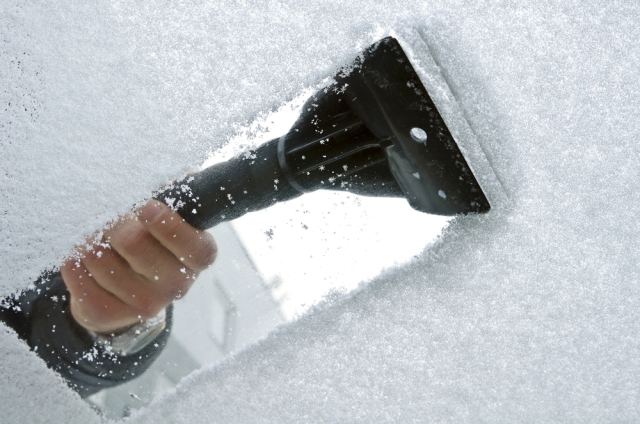
A fogged-up camera lens can ruin a perfect shot, and a frosty car window can lead to potentially deadly accidents. To help keep glass clear in harsh weather, scientists are developing an advanced new coating that resists both fogging and frosting.
Glass fogs up and frosts because of water. So you might assume so-called hydrophobic materials, which repel water, provide the best method of fighting such moisture. However, these solutions tend only to make water bead up, scattering light and obscuring views.
Researchers have also experimented with the opposite tactic, attempting to prevent fogging and frosting using hydrophilic materials, which attract water. Here, researchers hope to smear water across the glass surfaces in uniform sheets, to keep the moisture from distorting light. Although these materials work against fog, they can’t prevent frosting. When cold glass encounters humid air, the layer of water that develops simply freezes.
However, the new coating possesses both water-repelling and water-attracting properties, so it works against both fog and frost. The material contains organic compounds with both hydrophilic and hydrophobic components. The hydrophilic ingredients love water so much they absorb moisture, trapping it and keeping it from easily forming ice crystals. This lowers water’s usual freezing temperature and dramatically reduces frosting.
Meanwhile, the material’s hydrophobic components help repel contaminants that might spoil the hydrophilic effect.
“We have no freezing of water, even at low temperatures. It remains completely clear,” researcher Michael Rubner, a materials scientist at MIT, told TechNewsDaily.
When the new coating warms up from the freezing cold, it releases the water, “which just evaporates,” Rubner added.
The new coating does have its limits. “If it’s overwhelmed with water, any excess water can freeze,” Rubner said. “You wouldn’t want this on an airplane wing that constantly gets water on it, but an application like eyeglasses or windshields, it can be amazing.”
The researchers are now seeking to enhance the material’s durability to mechanical stresses. They detailed their findings online Jan. 29 in the journal ACS Nano.
http://www.livescience.com/27611-never-scrape-again-windshield-coating-repels-frost.html

 It's Interesting