Biobots arise from the cells of dead organisms − pushing the boundaries of life, death and medicine

Life and death are traditionally viewed as opposites. But the emergence of new multicellular life-forms from the cells of a dead organism introduces a “third state” that lies beyond the traditional boundaries of life and death.

Usually, scientists consider death to be the irreversible halt of functioning of an organism as a whole. However, practices such as organ donation highlight how organs, tissues and cells can continue to function even after an organism’s demise. This resilience raises the question: What mechanisms allow certain cells to keep working after an organism has died?

We are researchers who investigate what happens within organisms after they die. In our recently published review, we describe how certain cells – when provided with nutrients, oxygen, bioelectricity or biochemical cues – have the capacity to transform into multicellular organisms with new functions after death.

Life, death and emergence of something new

The third state challenges how scientists typically understand cell behavior. While caterpillars metamorphosing into butterflies, or tadpoles evolving into frogs, may be familiar developmental transformations, there are few instances where organisms change in ways that are not predetermined. Tumors, organoids and cell lines that can indefinitely divide in a petri dish, like HeLa cells, are not considered part of the third state because they do not develop new functions.

However, researchers found that skin cells extracted from deceased frog embryos were able to adapt to the new conditions of a petri dish in a lab, spontaneously reorganizing into multicellular organisms called xenobots. These organisms exhibited behaviors that extend far beyond their original biological roles. Specifically, these xenobots use their cilia – small, hair-like structures – to navigate and move through their surroundings, whereas in a living frog embryo, cilia are typically used to move mucus.

Xenobots are also able to perform kinematic self-replication, meaning they can physically replicate their structure and function without growing. This differs from more common replication processes that involve growth within or on the organism’s body.

Researchers have also found that solitary human lung cells can self-assemble into miniature multicellular organisms that can move around. These anthrobots behave and are structured in new ways. They are not only able to navigate their surroundings but also repair both themselves and injured neuron cells placed nearby.

Taken together, these findings demonstrate the inherent plasticity of cellular systems and challenge the idea that cells and organisms can evolve only in predetermined ways. The third state suggests that organismal death may play a significant role in how life transforms over time.

Postmortem conditions

Several factors influence whether certain cells and tissues can survive and function after an organism dies. These include environmental conditions, metabolic activity and preservation techniques.

Different cell types have varying survival times. For example, in humans, white blood cells die between 60 and 86 hours after organismal death. In mice, skeletal muscle cells can be regrown after 14 days postmortem, while fibroblast cells from sheep and goats can be cultured up to a month or so postmortem.

Metabolic activity plays an important role in whether cells can continue to survive and function. Active cells that require a continuous and substantial supply of energy to maintain their function are more difficult to culture than cells with lower energy requirements. Preservation techniques such as cryopreservation can allow tissue samples such as bone marrow to function similarly to that of living donor sources.

Inherent survival mechanisms also play a key role in whether cells and tissues live on. For example, researchers have observed a significant increase in the activity of stress-related genes and immune-related genes after organismal death, likely to compensate for the loss of homeostasis. Moreover, factors such as traumainfection and the time elapsed since death significantly affect tissue and cell viability.

Microscopy image of developing white and red blood cells
Different cell types have different capacities for survival, including white blood cells. Ed Reschke/Stone via Getty Images

Factors such as age, health, sex and type of species further shape the postmortem landscape. This is seen in the challenge of culturing and transplanting metabolically active islet cells, which produce insulin in the pancreas, from donors to recipients. Researchers believe that autoimmune processes, high energy costs and the degradation of protective mechanisms could be the reason behind many islet transplant failures.

How the interplay of these variables allows certain cells to continue functioning after an organism dies remains unclear. One hypothesis is that specialized channels and pumps embedded in the outer membranes of cells serve as intricate electrical circuits. These channels and pumps generate electrical signals that allow cells to communicate with each other and execute specific functions such as growth and movement, shaping the structure of the organism they form.

The extent to which different types of cells can undergo transformation after death is also uncertain. Previous research has found that specific genes involved in stress, immunity and epigenetic regulation are activated after death in mice, zebrafish and people, suggesting widespread potential for transformation among diverse cell types.

Implications for biology and medicine

The third state not only offers new insights into the adaptability of cells. It also offers prospects for new treatments.

For example, anthrobots could be sourced from an individual’s living tissue to deliver drugs without triggering an unwanted immune response. Engineered anthrobots injected into the body could potentially dissolve arterial plaque in atherosclerosis patients and remove excess mucus in cystic fibrosis patients.

Importantly, these multicellular organisms have a finite life span, naturally degrading after four to six weeks. This “kill switch” prevents the growth of potentially invasive cells.

A better understanding of how some cells continue to function and metamorphose into multicellular entities some time after an organism’s demise holds promise for advancing personalized and preventive medicine.


https://theconversation.com/biobots-arise-from-the-cells-of-dead-organisms-pushing-the-boundaries-of-life-death-and-medicine-238176

Antechinus: The tiny marsupials where males have sex until they die — then females eat their corpses

All species in the antechinus genus have the same frenzied mating system, where males’ testes disintegrate before a mammoth sex session that ends in them dying from organ failure.

By Hannah Osborne

Name: Antechinus (Antechinus)

Where it lives: Australia

What it eats: Insects, spiders, centipedes and sometimes frogs and small reptiles

Why it’s awesome: Antechinuses are little marsupials about the size of gerbils with a bizarre reproductive system: the males have sex until they die from organ failure.

There are 15 species of Antechinus all with the same deadly mating system. Their breeding season is a frenzied period lasting just two to three weeks. During this time, males give up sleep to have as much sex as possible, going for up to 14 hours at a time in the hope of passing on their genes. Once the breeding season ends, all the males drop dead.

Males die as a result of stress and exhaustion. During the mating window, testosterone and the stress hormone cortisol surge in their bodies. The increase in testosterone prevents them from processing the cortisol, causing organ failure and death.

Some male antechinuses survive, but this is very rare. “Males stop making sperm before the mating season and their testes disintegrate, so they are not even using energy on that during the mating period,” Diana Fisher, a mammal ecologist at the University of Queensland in Australia, said in a statement in 2013. “But they can never reproduce again even if they do live.”

During the mating season, sperm is stored in the epididymis and is constantly lost in urine, so they have a very brief window to mate before infertility and death.

The antechinus mass mortality event provides an opportunity — fresh food for the pregnant females and any males that manage to survive the sexfest. Females take the opportunity to cannibalize their own males.

In areas where different species of Antechinus overlap, females may also feast on males from other species. “Each species may benefit from eating dead males of the other,” Andrew Baker, an ecologist at the Queensland University of Technology, said in a statement in 2024.

Males from one Antechinus species may feed on those from another if the timing of their breeding seasons allows it. “For the later-breeding species, both sexes may take the opportunity to cannibalize dead males of the earlier-breeding species, to help stack on weight and condition before their own breeding period commences,” Baker said, adding that in one case, a male — potentially in the middle of his own mating season — was seen feeding on a “dead comrade” had hair loss indicating stress-induced changes. “He was perhaps destined soon to become somebody else’s meal,” Baker said.

Gestation in females lasts between 25 and 35 days, after which the undeveloped young move to a pouch on their mother’s abdomen to grow for another 50 days. Once the young are independent at about three months, the cycle starts again, with antechinuses reaching sexual maturity at around eight months.

Drinking moderate amounts of caffeine may cut risk for multiple cardiometabolic diseases

Key takeaways:

  • Drinking about three cups of coffee daily conferred the lowest risk for multiple cardiometabolic diseases.
  • A lower risk for multiple cardiometabolic diseases was tied to 100 mg or more caffeine intake daily.

Adults who drink caffeinated beverages such as coffee or tea may have a lower risk for developing multiple cardiometabolic diseases compared with adults with low or no intake, according to study findings.

In an analysis of data from the UK Biobank published in The Journal of Clinical Endocrinology & Metabolism, researchers found drinking 100 mg caffeine or more per day lowered the risk for cardiometabolic disease including type 2 diabetes, coronary heart disease and stroke compared with drinking less than 100 mg caffeine per day. The largest risk reduction was seen among those consuming 2.6 to 3.5 drinks of coffee per day or 200 mg to 300 mg caffeine daily.

“The findings highlight that promoting moderate amounts of coffee or caffeine intake as a dietary habit to healthy people might have far-reaching benefits for the prevention of cardiometabolic multimorbidity,” Chaofu Ke, MD, PhD, associate professor in the department of epidemiology and biostatistics, School of Public Health at Suzhou Medical College of Soochow University in China, said in a press release.

Researchers obtained data from adults aged 37 to 73 years in the UK Biobank who did not have multiple cardiometabolic diseases at baseline. Cardiometabolic multimorbidity was defined as being diagnosed with at least two of the following diseases: type 2 diabetes, CHD or stroke. Coffee, tea and caffeine intake were obtained from 24-hour dietary recalls.

There were 172,315 adults included in the caffeine analysis and 188,091 participants included in the coffee and tea analysis. During a median follow-up of 11.68 years, 0.76% in the caffeine group and 0.74% in the coffee and tea group developed two or more cardiometabolic diseases. Of adults included in the caffeine analysis, 78.83% reported a daily caffeine intake of more than 100 mg.

Compared with adults who did not drink coffee, a lower risk for multiple cardiometabolic diseases was observed for participants who drank 1.5 coffee drinks or less per day (HR = 0.71; 95% CI, 0.61-0.82), those who had 1.6 to 2.5 coffee drinks per day (HR = 0.69; 95% CI, 0.58-0.83), adults who drank 2.6 to 3.5 servings of coffee per day (HR = 0.52; 95% CI, 0.42-0.65), those who had 3.6 to 4.5 coffee drinks per day (HR = 0.61; 95% CI, 0.47-0.78) and participants who drank more than 4.5 servings of coffee per day (HR = 0.66; 95% CI, 0.5-0.88).

Adults who had 1.6 to 2.5 drinks of tea (HR = 0.66; 95% CI, 0.55-0.8), 2.6 to 3.5 servings of tea (HR = 0.72; 95% CI, 0.59-0.87), 3.6 to 4.5 drinks of tea (HR = 0.62; 95% CI, 0.5-0.78) and more than 4.5 drinks of tea daily (HR = 0.6; 95% CI, 0.47-0.77) were less likely to develop multiple cardiometabolic diseases than adults who did not drink tea.

Compared with adults who drank 100 mg or less of caffeine daily, those who had caffeine intake of 101 mg to 200 mg (HR = 0.78; 95% CI, 0.67-0.9), 201 mg to 300 mg (HR = 0.59; 95% CI, 0.5-0.7), 301 mg to 400 mg (HR = 0.63; 95% CI, 0.5-0.79) and more than 400 mg (HR = 0.6; 95% CI, 0.43-0.83) were less likely to develop multiple cardiometabolic diseases.

Researchers identified 80 plasma metabolites related to moderate coffee drinking and the development of multiple cardiometabolic diseases. Of those metabolites, 37 were negatively associated with moderate coffee intake and were most frequently tied to the expression of very LDL subclasses. There were 43 metabolites positively associated with moderate coffee intake, with the most frequent associations tied to the expression of HDL subclasses.

There were 97 plasma metabolites associated with drinking five or more servings of tea per day and the development of multiple cardiometabolic disorders, of which 60 were inversely associated with tea intake. Eighty-one metabolites were associated with both the development of multiple cardiometabolic disorders and caffeine intake of 201 mg to 300 mg per day, with 42 of those metabolites inversely associated with moderate caffeine intake.

The researchers wrote that the metabolites could help with identifying potential molecular intervention targets in the future.

“Future studies are warranted to gain a more in-depth insight into the pathway from coffee, tea and caffeine intake to circulating metabolites and then to cardiometabolic multimorbidity,” the researchers wrote.

Reference:

Moderate coffee and caffeine consumption is associated with lower risk of developing multiple cardiometabolic diseases, new study finds. https://www.newswise.com/articles/moderate-coffee-and-caffeine-consumption-is-associated-with-lower-risk-of-developing-multiple-cardiometabolic-diseases-new-study-finds. Published Sept. 17, 2024. Accessed Sept. 17, 2024.

Assessing brain disorders: New eye sensors use special material that generates electricity when it bends

by Laurie Fickman, University of Houston

A University of Houston engineering team has developed wearable sensors to examine eye movement to assess brain disorders or damage to the brain. Many brain diseases and problems show up as eye symptoms, often before other symptoms appear.

You see, eyes are not merely a window into the soul, as poets would have it. These incredibly precious organs are also an extension of the brain and can provide early warning signs of brain-related disorders and information on what causes them. Examining the eyes can also help track the progression and symptoms of physical and mental shocks to the brain.

Researchers say current eye-tracking systems have flaws and deliver insufficient amounts of data. Plus, they’re bulky, with multiple electrodes on the face and neck, expensive and have weak outputs.

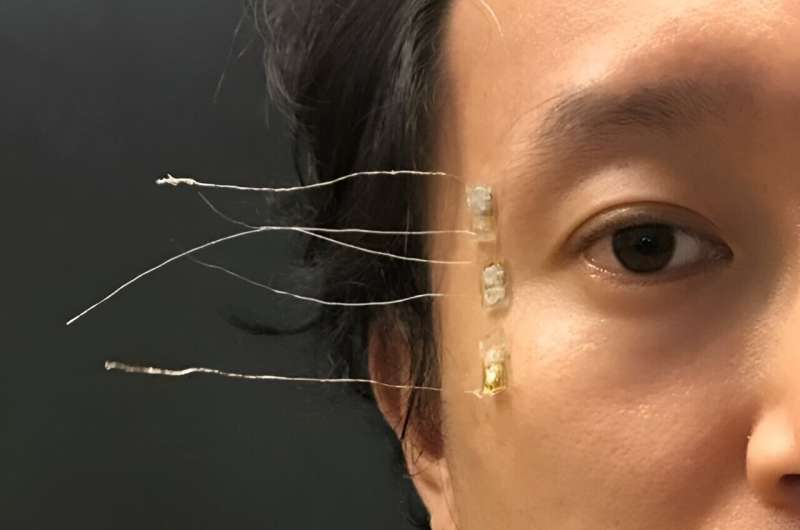
The new method, developed in the UH lab of Jae-Hyun Ryou, associate professor of mechanical engineering, with assistance from Nam-In Kim, post-doctoral researcher, is non-invasive, comfortably wearable, and safe, enabling easy and continuous measurements and monitoring of eyeball movements when combined with a hand-held display and computing device.

The new sensors are sleek and flexible, made from very thin, crystal-like film that generates electricity when it bends or moves. That’s a phenomenon called the piezoelectricity effect, and it allows certain materials to generate an electric charge in response to applied mechanical stress.

The output voltages from upper, mid, and lower sensors, or transducers, on different temple areas generate discernable patterns of voltage.

“Skin-attachable wearable sensors for monitoring vital signs and biomedical parameters are components of great importance in personal health care and portable diagnostic systems,” reports Ryou in Advanced Healthcare Materials.

“Among them, thin-film piezoelectric sensors offer unique advantages of easy fabrication at low cost, a wide range of available sizes, lightweight, excellent mechanical flexibility and stability, rapid reaction rate, high sensitivity, high signal-to-noise ratio and excellent long-term stability and durability.”

“The new sensors are easy to wear and can be used in brain-eye relationship studies to evaluate the brain’s functional integrity,” he said.

Intense focus on disease

Ophthalmological assessments of eye blinking patterns have been used for early diagnosis of disorders such as stroke, multiple sclerosis, Parkinson’s disease and Alzheimer’s disease. Also, ocular movements are strongly linked to various brain disorders, as eyeball and upper eyelid controls are affected by brain function.

In former studies, aberrant blink rate and blink modulation was measured in children with attention-deficit hyperactivity disorder with the spontaneous blink being a measure of the integrity of the dopaminergic system in the brain. Motor neurons in the brain, which relate to eyes and their muscle, have also been associated with autism.

“We believe that the F-PEMSA can be employed in many clinical studies concerning brain disorder conditions such as ADHD, autism, Alzheimer’s disease and Parkinson’s disease as well as the aftermath of traumatic brain injuries like post-concussion syndrome and post-traumatic stress disorder, potentially offering the prospect of early and accurate diagnoses and the development of personalized therapies,” said Ryou.

More information: Nam‐In Kim et al, Skin‐Attached Arrayed Piezoelectric Sensors for Continuous and Safe Monitoring of Oculomotor Movements, Advanced Healthcare Materials (2024). DOI: 10.1002/adhm.202303581

Journal information: Advanced Healthcare Materials 

Provided by University of Houston 

https://medicalxpress.com/news/2024-09-brain-disorders-eye-sensors-special.html

Research suggests neurons protect and preserve certain information through a dedicated zone of stable synapses

by Jennifer Michalowski, Massachusetts Institute of Technology

One of the brain’s most celebrated qualities is its adaptability. Changes to neural circuits, whose connections are continually adjusted as we experience and interact with the world, are key to how we learn. But to keep knowledge and memories intact, some parts of the circuitry must be resistant to this constant change.

“Brains have figured out how to navigate this landscape of balancing between stability and flexibility, so that you can have new learning and you can have lifelong memory,” says neuroscientist Mark Harnett, an investigator at MIT’s McGovern Institute for Brain Research.

In research published in Cell Reports, Harnett and his team show how individual neurons can contribute to both parts of this vital duality. By studying the synapses through which pyramidal neurons in the brain’s sensory cortex communicate, they have learned how the cells preserve their understanding of some of the world’s most fundamental features, while also maintaining the flexibility they need to adapt to a changing world.

Visual connections

Pyramidal neurons receive input from other neurons via thousands of connection points. Early in life, these synapses are extremely malleable; their strength can shift as a young animal takes in visual information and learns to interpret it. Most remain adaptable into adulthood, but Harnett’s team discovered that some of the cells’ synapses lose their flexibility when the animals are less than a month old. Having both stable and flexible synapses means these neurons can combine input from different sources to use visual information in flexible ways.

Postdoc Courtney Yaeger took a close look at these unusually stable synapses, which cluster together along a narrow region of the elaborately branched pyramidal cells. She was interested in the connections through which the cells receive primary visual information, so she traced their connections with neurons in a vision-processing center of the brain’s thalamus called the dorsal lateral geniculate nucleus (dLGN).

The long extensions through which a neuron receives signals from other cells are called dendrites, and they branch of from the main body of the cell into a tree-like structure. Spiny protrusions along the dendrites form the synapses that connect pyramidal neurons to other cells. Yaeger’s experiments showed that connections from the dLGN all led to a defined region of the pyramidal cells—a tight band within what she describes as the trunk of the dendritic tree.

Yaeger found several ways in which synapses in this region—formally known as the apical oblique dendrite domain—differ from other synapses on the same cells. “They’re not actually that far away from each other, but they have completely different properties,” she says.

Stable synapses

In one set of experiments, Yaeger activated synapses on the pyramidal neurons and measured the effect on the cells’ electrical potential. Changes to a neuron’s electrical potential generate the impulses the cells use to communicate with one another. It is common for a synapse’s electrical effects to amplify when synapses nearby are also activated. But when signals were delivered to the apical oblique dendrite domain, each one had the same effect, no matter how many synapses were stimulated.

Synapses there don’t interact with one another at all, Harnett says. “They just do what they do. No matter what their neighbors are doing, they all just do kind of the same thing.”

The team was also able to visualize the molecular contents of individual synapses. This revealed a surprising lack of a certain kind of neurotransmitter receptor, called NMDA receptors, in the apical oblique dendrites. That was notable because of NMDA receptors’ role in mediating changes in the brain.

“Generally when we think about any kind of learning and memory and plasticity, it’s NMDA receptors that do it,” Harnett says. “That is the by far most common substrate of learning and memory in all brains.”

When Yaeger stimulated the apical oblique synapses with electricity, generating patterns of activity that would strengthen most synapses, the team discovered a consequence of the limited presence of NMDA receptors. The synapses’ strength did not change. “There’s no activity-dependent plasticity going on there, as far as we have tested,” Yaeger says.

That makes sense, the researchers say, because the cells’ connections from the thalamus relay primary visual information detected by the eyes. It is through these connections that the brain learns to recognize basic visual features like shapes and lines.

“These synapses are basically a robust, high-fidelity readout of this visual information,” Harnett explains. “That’s what they’re conveying, and it’s not context-sensitive. So it doesn’t matter how many other synapses are active, they just do exactly what they’re going to do, and you can’t modify them up and down based on activity. So they’re very, very stable.”

“You actually don’t want those to be plastic,” adds Yaeger. “Can you imagine going to sleep and then forgetting what a vertical line looks like? That would be disastrous.”

By conducting the same experiments in mice of different ages, the researchers determined that the synapses that connect pyramidal neurons to the thalamus become stable a few weeks after young mice first open their eyes. By that point, Harnett says, they have learned everything they need to learn. On the other hand, if mice spend the first weeks of their lives in the dark, the synapses never stabilize—further evidence that the transition depends on visual experience.

The team’s findings not only help explain how the brain balances flexibility and stability; they could help researchers teach artificial intelligence how to do the same thing. Harnett says artificial neural networks are notoriously bad at this: When an artificial neural network that does something well is trained to do something new, it almost always experiences “catastrophic forgetting” and can no longer perform its original task. Harnett’s team is exploring how they can use what they’ve learned about real brains to overcome this problem in artificial networks.

More information: Courtney E. Yaeger et al, A dendritic mechanism for balancing synaptic flexibility and stability, Cell Reports (2024). DOI: 10.1016/j.celrep.2024.114638

Journal information: Cell Reports 

https://medicalxpress.com/news/2024-09-neurons-dedicated-zone-stable-synapses.html

Brain implant lets man control Amazon’s Alexa with thought

A patient with a degenerative disease was able to command Amazon’s Alexa digital assistant with his mind, the company behind the technological innovation announced Monday, letting him stream shows and control devices with only his thoughts.

An implant in a blood vessel on the surface of the 64-year-old man’s brain let him mentally “tap” icons on an Amazon Fire tablet, brain-computer interface company Synchron said.

The patient, who is living with amyotrophic lateral sclerosis (ALS), was able to make video calls, play music, stream shows, control smart home devices such as lights, shop online, and read books by using his mind to direct Alexa, according to the New York-based company.

ALS is a degenerative nerve disease that leads to muscle weakness and paralysis.

“To be able to manage important aspects of my environment and control access to entertainment gives me back the independence that I’m losing,” the patient, named only as Mark, said in a release.

The test was intended to show how customers could use just their minds to control smart homes with Alexa-compatible devices such as door cameras, plugs, and thermostats, according to the company.

“While many smart home systems rely on voice or touch, we are sending control signals directly from the brain,” Synchron founder and chief executive Tom Oxley said in the release.

“Patients can interact with devices in their home hands and voice-free, using only their thoughts.”

Several companies, including Elon Musk’s Neuralink, are working on connecting brains with computers.

Neuralink in January installed a brain implant in a man paralyzed after a diving accident. Musk, who also owns Tesla and X, touted the implant as a success.

In July he said his startup is “moving on” to a second test patient as its tech improves.

https://medicalxpress.com/news/2024-09-brain-implant-amazon-alexa-thought.html

New evidence that breathing may bring microplastics into the human brain

For the first time, scientists have detected microscopic microplastics lodged in the human brain. Researchers in Germany and Brazil say that 8 out of 15 autopsied adults had microplastics detected within their brain’s smell centers, the olfactory bulb.

The particles were likely breathed in over a lifetime, since tiny floating microplastics are ubiquitous in the air.

Although microplastics have already been found in human lungs, intestines, liver, blood, testicles and even semen, it had long been thought that the body’s protective blood-brain barrier might keep the particles out of the brain.

However, the new study suggests that there’s “a potential pathway for the translocation of microplastics to the brain” via the olfactory bulb, according to a team led by Luis Fernando Amato-Lourenco, of the Free University Berlin and Thais Mauad, an associate professor of pathology at the University of Sao Paolo in Brazil.

The team published its findings Sept. 16 in the journal JAMA Network Open.

“With much smaller nanoplastics entering the body with greater ease, the total level of plastic particles may be much higher,” Mauad said in a news release from the Plastic Health Council, a group that advocates for reductions in plastics use.

“What is worrying is the capacity of such particles to be internalized by cells and alter how our bodies function,” Mauad added.

The new study involved brain tissues from 15 routine autopsies conducted on deceased residents of Sao Paulo, Brazil. The individuals ranged in age at death from 33 to 100 (average age 69.5 years).

“A total of 16 synthetic polymer [plastic] particles and fibers were identified” in the brain olfactory bulbs of 8 of the 15 deceased people, the researchers report.

In nearly 44% of cases, the plastic was polypropylene—one of the most common plastics and used in everything from packaging to clothing and home accessories.

That suggests “indoor environments as a major source of inhaled microplastics,” the team said.

So just how are these microscopic fragments invading the brain?

Amato-Lourenco and colleagues point out that nasal mucosa lying outside the brain may interact with cerebrospinal fluid to allow entry of microplastics into the olfactory bulb via tiny “perforations” in bony structures found in this area.

“So when you breathe through your nose, your olfactory nerve directly samples particles and reacts to the particles that you are inhaling as a direct sensory mechanism,” said Dr. Wells Brambl, core faculty for medical toxicology at Long Island Jewish Medical Center in New York City.

“The fact that there’s no blood-brain barrier there leads to direct access to the brain, and most importantly, right above the olfactory nerve are the frontal and prefrontal lobes, which are where we believe the seat of consciousness is,” added Brambl, who was not involved in the study.

Other studies have already shown that “environmental black carbon particles” from air pollution can be found in the olfactory bulb, and in rare cases, tiny amoebae that can trigger a deadly form of encephalitis are also detected there, the Brazilian researchers noted.

They said the new data “extend the notion that not only black carbon but also microplastics accumulate in the olfactory bulb in humans.”

Can these microplastics affect brain health? That’s not yet clear, Amato-Lourenco’s team said, but the “potential” is there.

“Considering the potential neurotoxic effects caused by microplastics in the brain, and the widespread environmental contamination with plastics, our results should raise concern in the context of increasing prevalence of neuodegenerative diseases” such as Parkinson’s, ALS and other maladies, the researchers said.

“My intuition would say that it’s not good to have plastic in your brain,” Brambl said. “However, the data in long-term prospective studies have not yet been performed. So, it’s impossible to make any definitive conclusions.”

Still, he said, “I think that this study is very thought-provoking in the sense that we need to start thinking about this as a real public health concern for the long term.”

More information: Luís Fernando Amato-Lourenço et al, Microplastics in the Olfactory Bulb of the Human Brain, JAMA Network Open (2024). DOI: 10.1001/jamanetworkopen.2024.40018

Find out more about microplastics at Yale University.

Journal information: JAMA Network Open 

https://medicalxpress.com/news/2024-09-microplastics-human-brain.html

High doses of some prescription stimulants tied to increased psychosis risk

McLean Hospital

Prescribing rates for stimulants that treat attention-deficit/hyperactivity disorder (ADHD) have increased significantly over the past decade, with some of the largest increases reported during the COVID-19 pandemic. A new study of adult emergency department admissions at Mass General Brigham, led by McLean Hospital researchers, found that individuals who are taking high doses of amphetamine (e.g. Adderall) face more than a five-fold increased risk for developing psychosis or mania. Findings were published September 12th in the American Journal of Psychiatry.

Overall, individuals with past-month prescription amphetamine use had a greater likelihood of new-onset psychosis or mania than individuals without past-month use. The risk was highest in those taking 30 mg or more of dextroamphetamine (which corresponds to 40 mg of Adderall), according to the study.

Previous studies have linked stimulants to psychosis and mania risk; however, information had been lacking on whether dosing impacted risk.

“Stimulant medications don’t have an upper dose limit on their labels, and our results show that it is clear that dose is a factor in psychosis risk and should be a chief consideration when prescribing stimulants,” said lead study author Lauren Moran, MD, a pharmacoepidemiology researcher at McLean Hospital. “This is a rare but serious side effect that should be monitored by both patients and their doctors whenever these medications are prescribed.”

Moran said the study was born out of her past clinical observations as an inpatient psychiatrist. She and her McLean colleagues would regularly see patients coming in experiencing first episodes of psychosis, and their medical records would reveal they were prescribed high doses of stimulants by their doctors.

Researchers reviewed electronic health records of Mass General Brigham patient encounters between 2005 and 2019, focusing on adults aged 16 to 35, the typical age of onset for psychosis and schizophrenia. All patients were admitted to McLean Hospital following referrals from other hospitals in the Mass General Brigham healthcare system. The researchers identified 1,374 cases of individuals presenting with first-episode psychosis or mania, compared to 2,748 control patients with a psychiatric hospitalization for other conditions like depression or anxiety. They conducted a comparison analysis of stimulant use over the preceding month and accounted for other factors, including substance use, in order to isolate the effects of stimulants.

They found the attributable risk percentage among those exposed to any prescription amphetamine was nearly 63% and for high dose amphetamine was 81%. These findings suggest that among people who take prescription amphetamine, 81% of cases of psychosis or mania could have been eliminated if they were not on the high dose. While a significant dose-related risk increase was seen in patients taking high doses of amphetamine, no significant risk increase was seen with methylphenidate (Ritalin) use, which is consistent with previous research, including a 2019 study led by Moran.

While the study does not prove causality, the researchers note there is a plausible biological mechanism in neurobiological changes that include a release of higher levels of the neurotransmitter dopamine from amphetamines, that parallel dopaminergic changes observed in psychosis.

Limitations of the study include inconsistencies with how electronic health records are kept. Additionally, with the research taking place in a psychiatric hospital in the Boston area that sees many patients with psychosis, it may make these findings less generalizable to other parts of the country.

Moran said the findings need not create alarm but should lead to extra caution when these medications are prescribed, especially for those who have risk factors for psychosis and mania.

“There’s limited evidence that prescription amphetamines are more effective in high doses,” said Moran. “Physicians should consider other medications our study found to be less risky, especially if a patient is at high risk for psychosis or mania.”

Authorship: In addition to Moran, Mass General Brigham co-authors included Joseph P. Skinner, BA (BWH), Ann K. Shinn MD, MPH (McLean), Kathryn Nielsen (McLean), Vinod Rao, MD, PhD (MGH), Trevor Taylor, MD, MPH (MGH), Talia R. Cohen (McLean), Cemre Erkol, MD (McLean), Jaisal Merchant, MA (McLean), Christin A. Mujica, MA (McLean), Roy H. Perlis, MD, MSc, (MGH) and Dost Ongur, MD, PhD (McLean).

Funding: This work was funded by a grant from the National Institute of Mental Health (NIMH), R01 MH122427.

Disclosures: Perlis received personal fees from Genomind, Burrage Capital, Psy Therapeutics Inc, Circular Genomics Inc, and Vault Health unrelated to the submitted work. Dr. Ongur received honorariums for scientific presentations to Neumora Inc. and Guggenheim LLC unrelated to the submitted work. Dr. Moran is employed by Sage Therapeutics (unrelated to this work and after study completed and submitted for publication). All other authors report no financial relationships with commercial interests.

Paper cited: Moran, LV et al. “Risk of Incident Psychosis and Mania with Prescription Amphetamines,” American Journal of Psychiatry. DOI: 10.1176/appi.ajp.20230329

https://www.eurekalert.org/news-releases/1057164

CDC data reveal three social drivers that influence suicide risk

Key takeaways:

  • New data revealed that health insurance coverage, internet access and income level can influence suicide risk.
  • PCPs should create a comfortable environment to address these factors and reduce suicide risk.

By addressing factors like health insurance coverage, internet access and income level, primary care providers can play an important role in suicide prevention, according to experts.

“September is Suicide Prevention Month and today is World Suicide Prevention Day, a day where we raise awareness and attention to this issue, emphasizing the message that suicide is preventable,” Debra Houry, MD, MPH, CDC’s Chief Medical Officer, said in a media briefing on Sept. 10. “Suicide rates have increased over the last 20 years and remain high: more than 49,000 people died by suicide in 2022, and provisional data indicate a similar number of people died by suicide in 2023.”

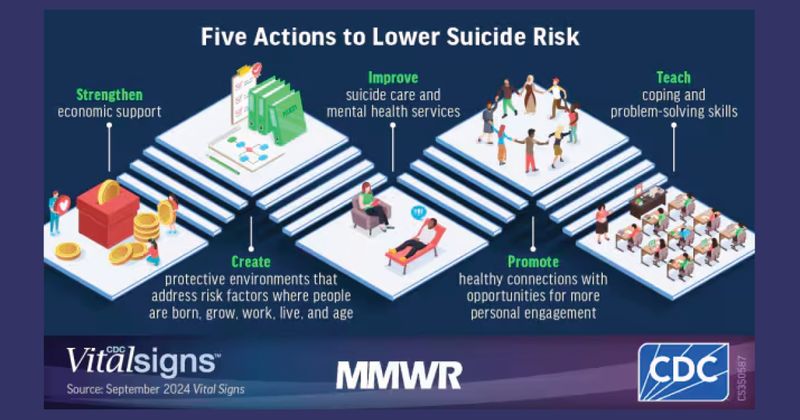
PC0924Houry_Graphic_01_WEB
By addressing factors like health insurance coverage, internet access and income level, PCPs can play an important role in suicide prevention, according to experts. Image: CDC

Brent Smith, MD, MSc, MLS, FAAFP, a family physician in Mississippi and member of the American Academy of Family Physicians board of directors, told Healio that PCPs “play a really underappreciated, undervalued role in all mental health care, but specifically suicide prevention.”

“Family physicians often become the de facto treatment for mental health because they’re the ones that are already established with the patient, that are available, and that have established a patient’s trust, and therefore kind of have a unique window,” he said.

Although suicide prevention often focuses on helping patients in crisis, Houry said it is also vital to reduce factors that lead to increased suicide risk and actively address factors that promote resilience, “to keep people from ever getting to a crisis.”

In that vein, a new CDC vital signs report highlighted the importance of exploring community factors — particularly, health insurance coverage, household income levels and broadband internet access — that could be improved to help prevent suicides.

“We all likely know someone who has struggled with suicidal thoughts,” Houry said. “I lost two medical school classmates to suicide and know how this crisis can truly impact anyone and everyone.”

The new data

Alison Cammack, PhD, MPH, lead author of the new vital signs report, and colleagues found that suicide rates were lowest for counties with higher levels of household income, broadband internet access and health insurance coverage.

More specifically, when compared with the counties that had the lowest levels of these factors, suicide rates were:

  • 13% lower in counties with the most household income;
  • 26% lower in counties with the highest health insurance coverage; and
  • 44% lower in counties where most of the homes have broadband internet access.

Cammack said there could be many reasons as to why this may be the case.

“We know that these three factors are linked with protective factors that have been shown to help reduce the risk of suicide,” Cammack, who is also health scientist of the CDC Suicide Prevention Team, said. “Health insurance coverage can help [patients] access mental health and primary care services and treatment; high-speed Internet access connects people to prevention resources, job opportunities, telehealth services and friends and family; and household financial resources such as income and economic support put in place by local state and federal governments can help families secure food, housing, health care and other basic needs.”

The report also found some groups continue to face higher suicide rates, Cammack added, including men, people in rural areas, white people and American Indian/Alaskan Native people.

“It is important to note that many barriers challenge a person’s ability to access health insurance, broadband internet and higher income,” she said. “For example, tribal and rural communities may lack the infrastructure to obtain internet access. It’s imperative that our nation works toward a comprehensive suicide prevention approach focused on programs, practices and policies designed to prevent suicide crises before they happen.”

For patients who are already stressed by these community-level factors, “it does not take much other stress to really put you in a bad place from a mental health standpoint,” Smith said.

“All of the things that we can’t control with medicine … Those social determinants play as much of a role as anything else,” he said. “And you can throw medicine [at symptoms] all you want, but we still have to treat the other things that the patients deal with.”

Importance for PCPs

Better understanding factors that influence suicide risk can improve prevention efforts and ultimately save more lives, Houry said.

“Suicide is preventable, and we know what works to stop it and to spare families and friends from losing loved ones,” she said.

PCPs must prioritize evaluating and treating these and other social factors that can impact patient health, Smith said.

“Move social determinants of health higher up in your priority list when you’re dealing with mental health, suicide and other issues,” he said. “Come to it sooner, address it quicker, and make it as much of a priority as you can in your treatment plans, in order to have a more lasting impact and more success in treating these types of things.”

That can start with creating a positive environment where patients feel safe in talking about mental health, he said.

“The biggest thing for you to do is just make the environment comfortable for people to talk about the things that are really bothering them, and then you’ll start to see some actual impact on this,” Smith said. “The problem is just making sure we’re putting it into perspective. We often undervalue how much these social stressors drive their other issues.”

Smith acknowledged that PCPs are often unable to address social determinants of health until they have tried therapy, medicine and other treatment modalities. If they do prioritize addressing these factors, “they’ll find that they’re more successful getting not only their mental health issues under control, but also their chronic medical problems,” he added.

“Our work to make patients healthy has to go beyond just a clinical room, just the exam room,” Smith said. “It’s got to go back into their communities.”

Anyone in crisis can seek confidential and free help by contacting the 988 Suicide & Crisis Lifeline by texting or calling 988 or reaching out online at 988lifeline.org.

Reference:

New Study Shows that Chronic Neurodegeneration can be Prevented after Traumatic Brain Injury

September 10, 2024

By Ansley Kelm

CLEVELAND – Violent blows or jolts to the head can cause traumatic brain injury (TBI), and there are currently about five million people in the U.S. living with chronic neurodegeneration and related impairments due to TBI. In addition to cognitive and mental health impairment, chronic neurodegeneration may also contribute to why TBI increases the risk of age-related neurodegenerative diseases, such as Alzheimer’s or Parkinson’s disease. It could also play a role in chronic traumatic encephalopathy (CTE).

Due to the lack of understanding of why acute TBI transitions into chronic neurodegeneration, however, there are currently no treatments that protect patients from this outcome. Now, University Hospitals (UH) and Case Western Reserve University researchers have moved a step closer to finding answers in a study recently published in Cell Reports Medicine

“We started with the hypothesis that TBI might pathologically impair the balance of mitochondrial fission and fusion,” explained Preethy S. Sridharan, PhD, lead author of the study. “The normal homeostatic balance of mitochondrial fission and fusion is how mitochondria consistently produce enough energy for the cell while also sequestering and disposing damaged parts. Given the very high energy demands of the brain, this is particularly important for brain health across our lifespan.”

The process is governed by the interaction of two cellular proteins: Fis1 and Drp1. It was previously shown that other neurodegenerative diseases, including Alzheimer’s disease (AD) and Huntington’s disease, display pathologically elevated mitochondrial fission due to elevated expression of Drp1. Here, the research team discovered that mitochondrial fission is pathologically elevated in mouse and human TBI as well, but that it is caused by increased expression of Fis1, rather than Drp1.

They next tested whether pharmacologically reducing excessive mitochondrial fission for only two weeks after TBI, by administering a small peptide agent named P110 that blocks the interaction of Fis1 and Drp1, might halt this process and protect the brain. P110 was previously discovered and developed by co-senior author, Xin Qi, PhD, the Jeanette M. and Joseph S. Silber Professor of Brain Sciences in the CWRU Department of Physiology and Biophysics and Co-Director of the CWRU Center for Mitochondrial Research and Therapeutics.

“Brief P110 treatment during the acute time period after TBI permanently normalized mitochondrial fission / fusion and prevented subsequent harm to the brain, including oxidative damage, blood-brain barrier deterioration, axonal degeneration, and cognitive impairment, 17 months later. This is equivalent to many decades in people,” explained Andrew A. Pieper, MD, PhD, senior author of the study and Director of the Brain Health Medicines Center of the Harrington Discovery Institute at UH. “The same treatment administered much later, however, had no protective effect. Thus, there is a critical time window after TBI wherein this treatment can be effective.”

Dr. Pieper also holds the Morley-Mather Chair in Neuropsychiatry at UH and the CWRU Rebecca E. Barchas, MD, DLFAPA, University Professorship in Translational Psychiatry. He additionally serves as Psychiatrist and Investigator in the Louis Stokes VA Geriatric Research Education and Clinical Center (GRECC).

The team hopes that P110 or a related compound will be tested clinically in acute TBI patients. “Next steps in the basic science research, on the other hand, involve further utilization of this model to yield additional new insights into understanding the pathophysiology and treatment opportunities for this important problem,” explained Dr. Qi.

In addition to extending their investigation to additional different preclinical models of TBI, the research team also plans to investigate whether the mechanism they discovered could play a role in why TBI accelerates AD. They speculate that the combination of increasing two components of the same system (increased Fis1 in TBI and increased Drp1 in AD) could cause a synergistic deleterious effect that significantly advances the development and severity of AD after patients have experienced a TBI.

___

This study was supported by The Valour Foundation.

Sridharan, Preethy S. et al. “Acutely blocking excessive mitochondrial fission prevents chronic neurodegeneration after traumatic brain injury.” Cell Reports Medicine. DOI: 10.1016/j.xcrm.2024.101715

https://news.uhhospitals.org/news-releases/articles/2024/09/new-study-shows-that-chronic-neurodegeneration-can-be-prevented-after-traumatic-brain-injury