Seattle’s Sperm Bike

It looks like Seattle has been inseminated.

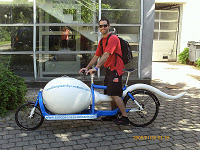
The city known for rainy days and the Space Needle is now home to Americas’s first authentic sperm bike.

Specially designed to make speedy deliveries from the sperm bank to clinic, the semen-shaped bike’s unique storage cooling system, located in the “head,” prevents samples from becoming contaminated.

Not only is it functional, the nearly 10-foot-long sperm bike will also make you the most popular cyclist in the bike lanes, Gary Olsem of the Seattle Sperm Bank explains.

“It’s getting a lot of looks. People are stopping. They don’t quite understand what’s going on. You put a giant sperm on a bike, and you’re going to get some attention.”

Seattle is actually the second city to adopt a sperm bike, which first went for a spin with The European Sperm Bank in cyclist-friendly Copenhagen.

Thanks to Kebmodee, for bringing this to the attention of the It’s Interesting community.

http://kebmodee.blogspot.com/2011/10/sperm-bike.html?utm_source=feedburner&utm_medium=email&utm_campaign=Feed%3A+Kebmodee+%28kebmodee%29


Missing $6.6 Billion In Iraq is Found


A U.S. Iraq inspector general report that concluded this week that $6.6 billion in shrink-wrapped cash the U.S. government previously feared had gone missing in the chaotic early days of the Iraq occupation has in fact been safely accounted for.

“The mystery of $6 billion that seemed to go missing in the early days of the Iraq war has been resolved, according to a new report,” CNN national security producer Charles Keyes reported Wednesday. “New evidence shows most of that money, $6.6 billion, did not go astray in that chaotic period, but ended up where it was supposed to be, under the control of the Iraqi government, according to a report from the office of the Special Inspector General for Iraq Reconstruction or SIGIR.”

Stuart Bowen, the special inspector general for Iraq reconstruction, had previously testified that as much as $6.6 billion of the $10 billion the United States shipped to Iraq had disappeared due to “weaknesses in [the Department of Defense’s] financial and management controls,” Keyes wrote, citing the bureaucratese from a previous SIGIR report.

The cash had in part been drawn from Iraq’s own international assets, accrued during the pre-war, UN-run Oil for Food program. It was flown to Iraq in the wake of the U.S. 2003 invasion; the idea was that it would help pay for the Iraq reconstruction and development efforts under the Coalition Provisional Authority, the U.S.-led occupation outfit that dissolved in 2004. The original idea was to store most of the money in accounts in the Central Bank of Iraq; U.S. occupation authorities also apparently stored a few hundred million in a vault at one of Saddam Hussein’s palaces they used as their headquarters for various cash needs.

After the Coalition Provision Authority dissolved in 2004, however, it wasn’t clear where the funds had gone, the previous SIGIR report said. But apparently, the money was properly transferred to accounts held at the Central Bank of Iraq, the new SIGIR report found.

“But the inspector general’s new report says almost all the $6.6 billion was properly handed over to Iraq and its Central Bank,” Keyes writes. “‘SIGIR was able to account for the unexpected [Development Fund of Iraq] funds remaining in DFI accounts when the [Coalition Provisional Authority] dissolved in June 2004,’ the new report says. ‘Sufficient evidence exists showing that almost all of the remaining $6.6 billion remaining was transferred to actual and legal [Central Bank of Iraq] control.'”

This is not to say that the mystery of all the billions and billions the U.S. spent in Iraq has been entirely resolved. The SIGIR report says that inspectors are still trying to piece together the fate of some of the few hundred million that U.S. officials stowed at one of Saddam Hussein’s former palaces.

http://news.yahoo.com/blogs/envoy/once-feared-lost-now-accounted-iraq-inspector-says-153935856.html

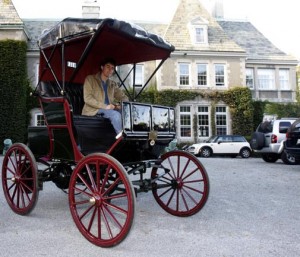
115 Year Old Electric Car Got Same Miles Per Charge as the Modern Chevy Volt


The Roberts electric car, built in 1896, gets a40 miles to the charge — exactly the mileage Chevrolet advertises for the Volt, the highly touted $31,645 electric car General Motors CEO Dan Akerson called “not a step forward, but a leap forward.”

Read more: http://dailycaller.com/2011/10/14/114-year-old-electric-car-gets-same-40-miles-to-the-charge-as-chevy-volt/#ixzz1b397Xkgn

 
Thanks to Kedmobee for bringing this to the attention of the It’s Interesting community.

FDA Allowed Oil-Tainted U.S. Gulf Coast Seafood Onto the Market


A peer-reviewed study released this week has concluded that the government’s safety testing methodologies for Gulf of Mexico seafood were insufficient to prevent oil-tainted animals from being sold in U.S. supermarkts.

Produced by the Natural Resources Defense Council (NRDC) and published in the journal Environmental Health Perspective, the study concludes that the Food and Drug Administration (FDA) used outdated risk assessment techniques when evaluating the safety of gulf seafood in the wake of the worst accidental oil spill in human history.

Ultimately, the FDA was responsible for allowing food with “10,000 times too much contamination” than should be permitted, the study’s authors said, failing to highlight the elevated risk to children and pregnant women.

http://www.rawstory.com/rs/2011/10/14/study-fda-allowed-oil-tainted-seafood-onto-market/

Thanks to Kedmobee for bringing this to the attention of the It’s Interesting community.

Update on Wild Animals in Ohio

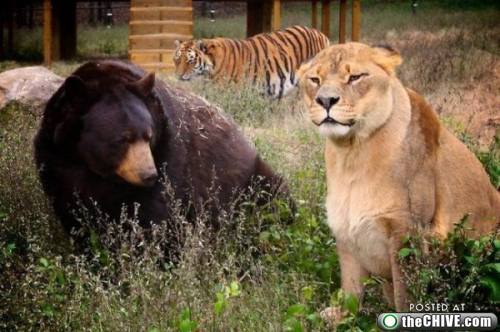
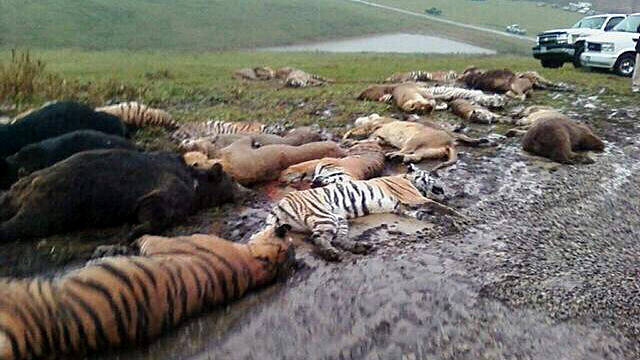
An Ohio sheriff defended the killings of more than four dozen lions, tigers and other wild animals Wednesday after they were turned loose from a farm outside Zanesville by its suicidal owner.

Of the 56 animals released Tuesday night, only a grizzly bear, two monkeys and three leopards were taken alive, Muskingum County Sheriff Matt Lutz said. One monkey remained unaccounted for Wednesday night, but Lutz and conservationist Jack Hanna, who assisted in the effort, said the animal may have been eaten by one of the big cats.

Lutz told reporters earlier that the farm’s owner, Terry Thompson, pried open cages and left the farm’s fences open before dying from a self-inflicted gunshot wound Tuesday afternoon. Lutz told CNN’s “Anderson Cooper 360” that none of his deputies are equipped with tranquilizer guns. And with night falling Tuesday, he gave the order to kill the escaped animals.

“If this had been a 9 o’clock or 10 o’clock incident, in the middle of the day, odds are high that we may have been able to surround the area and keep everything contained,” he said. “But our biggest problem that we had was nightfall. We had about an hour, hour and a half of light, and we just couldn’t take the chance.”

As of Wednesday afternoon, authorities had killed 49 animals — 18 tigers, 17 lions, six black bears, two grizzly bears, three mountain lions, two wolves and a baboon. Those captured alive were taken to the Columbus Zoo.

Hanna, the zoo’s director emeritus, said he was upset by loss of “precious” animals, but defended the decision to use deadly force.

“To have no one hurt or killed here with 40-something animals getting loose is unbelievable,” he told CNN’s “The Situation Room.”

Hanna led a team of experts who arrived with four tranquilizer guns late Tuesday in an effort to corral the animals. He said the drugs take several minutes to subdue an animal even with a good shot, and one tiger had to be killed Wednesday afternoon when it turned on a veterinarian after being hit with a tranquilizer dart.

Overnight, sheriff’s deputies searched the eastern Ohio woods around Zanesville with night-vision gear and patrolled in pickups, armed with shotguns. Flashing signs on the highways in eastern Ohio warned motorists Wednesday: “Caution. Exotic animals.” Schools were closed, and some frightened residents said they were keeping to their homes as sheriff’s deputies hunted lions, tigers, leopards and grizzly bears.

“Yeah, there’s a lion on Mount Perry Road. … I just drove by and it walked out in front of me and was standing there under the street light,” one caller to 911 told deputies.

Zanesville Mayor Howard Zwelling said he received calls from people who were concerned that the animals had been killed. He said authorities were trying to use tranquilizers whenever possible. But Lutz told reporters, “We are not talking about your normal everyday house cat or dog.

“These are 300-pound Bengal tigers that we have had to put down,” he said.

Thompson’s property is about 2 miles outside Zanesville. The 62-year-old had been released from a federal prison September 30 after pleading guilty earlier this year to possessing illegal firearms, including five fully automatic firearms. A civil case seeking forfeiture of firearms was pending, according to the U.S. attorney’s office in Ohio’s Southern District.

He also had been convicted of animal cruelty and animals at large in 2005 and was arrested several times for traffic violations.

Authorities were waiting on the results of an autopsy to determine the exact cause of his death, but Lutz said Thompson shot himself just after releasing the animals.

Sam Kopchak, Thompson’s neighbor, said he saw lions and bears running free Tuesday evening, with one tiger chasing horses. Kopchak managed to get himself and his horse into his barn and telephoned his mother.

“We have a major problem,:” he told her. That’s when she called the police.

“It was like a war zone,” Kopchak said when authorities descended on Thompson’s property, set off the road named after Kopchak’s family.

Kopchak described Thompson as aloof. He loved animals. Kopchak saw him driving one time with a baby black bear on his chest.

Lutz said authorities found primates inside the house.

The community was in a state of “shock and surprise,” said Tom Warne, owner of Donald’s Donuts and a lifelong resident of Zanesville.

“It’s the craziest sort of thing,” he said.

Warne said he had met Thompson a few times. He used to come into the doughnut shop at one time.

The Humane Society of the United States and the American Society for the Prevention of Cruelty to Animals urged Ohio officials Wednesday to issue an emergency rule to crack down on exotic animal ownership in the wake of the slaughter. A previous emergency order issued by then-Gov. Ted Strickland that prohibited people convicted of animal cruelty from owning exotic animals expired in April.

The Humane Society said Thompson “would almost certainly have had his animals removed by May 1, 2011, if the emergency order had not expired.”

“Every month brings a new, bizarre, almost surreal incident involving privately held, dangerous wild animals,” said Wayne Pacelle, president and CEO of the Humane Society. “In recent years, Ohioans have died and suffered injuries because the state hasn’t stopped private citizens from keeping dangerous wild animals as pets or as roadside attractions. Owners of large, exotic animals are a menace to society, and it’s time for the delaying on the rule-making to end.”

Fritz Douthitt, a volunteer at the Zanesville Animal Shelter Society, recalled Thompson’s 2005 trial for cruelty and torture of cattle and bison. She said he had not been able to get up the hill to feed his livestock, and they died.

Douthitt said it is inappropriate for people like Thompson to keep dangerous animals as pets, just as it was to shoot so many of them. Local governments, she said, ought to train law enforcement officers so they are prepared for bizarre cases such as the one that unfolded in Zanesville.

For lions, tigers and bears to die, she said, was “unforgivable.”

Starbucks Warns of Coffee Shortage in the Future Due to Climate Change

Starbucks is warning of a threat to world coffee supply because of climate change.  In a telephone interview with the Guardian, Jim Hanna, the company’s sustainability director, said its farmers were already seeing the effects of a changing climate, with severe hurricanes and more resistant bugs reducing crop yields.

The company is now preparing for the possibility of a serious threat to global supplies. “What we are really seeing as a company as we look 10, 20, 30 years down the road – if conditions continue as they are – is a potentially significant risk to our supply chain, which is the Arabica coffee bean,” Hanna said.

It was the second warning in less than a month of a threat to a food item.  The International Centre for Tropical Agriculture has warned it would be too hot to grow chocolate in much of the Ivory Coast and Ghana, the world’s main producers, by 2050.

Hanna is to travel to Washington on Friday to brief members of Congress on climate change and coffee at an event sponsored by the Union of Concerned Scientists.

The coffee giant is part of a business coalition that has been trying to push Congress and the Obama administration to act on climate change – without success, as Hanna acknowledged.

The coalition, including companies like Gap, are next month launching a new campaign – showcasing their own action against climate change – ahead of the release of a landmark science report from the UN’s IPCC.

Hanna told the Guardian the company’s suppliers, who are mainly in Central America, were already experiencing changing rainfall patterns and more severe pest infestations.

Even well-established farms were seeing a drop in crop yield, and that could well discourage growers from cultivating coffee in the future, further constricting supply, he said. “Even in very well established coffee plantations and farms, we are hearing more and more stories of impacts.”

These include: more severe hurricanes, mudslides and erosion, variation in dry and rainy seasons.

http://www.guardian.co.uk/business/2011/oct/13/starbucks-coffee-climate-change-threat


Thanks to Mr. C for bringing this to the attention of the It’s Interesting community.

Florida Republican Lawmaker Wants to Repeal Anti-Dwarf Tossing Legislation in Order to Create Jobs

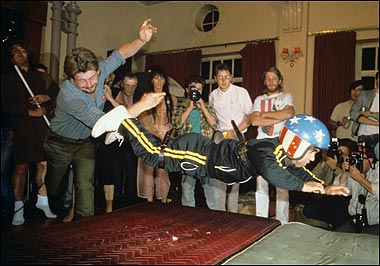
Dwarf tossing is a bar attraction in which dwarfs wearing special padded clothing or Velcro costumes are thrown onto mattresses or at Velcro-coated walls.

Participants compete to throw the dwarf the farthest.

The activity was popular in some Florida bars in the late 1980s.

Robert and Angela Van Etten, Florida members of the Little People of America, convinced the state’s legislators in 1989 that dwarf tossing be made illegal. A measure banning dwarf tossing was passed with a wide margin.

Now, Florida Republican state legislator Bill Workman has come up with a bold plan to help Florida’s economy: he wants to lift the ban on dwarf tossing to create jobs.

“I’m on a quest to seek and destroy unnecessary burdens on the freedom and liberties of people,” Workman said. “This is an example of Big Brother government.

“All that it does is prevent some dwarfs from getting jobs they would be happy to get,” Workman said. “In this economy, or any economy, why would we want to prevent people from getting gainful employment?”

Workman is actually crafting a bill to repeal the ban, which he will present to the Florida State Senate.


http://offthebench.nbcsports.com/2011/10/06/florida-lawmaker-wants-to-repeal-dwarf-tossing-ban-to-create-jobs/related/