Japanese white-collar workers are already being replaced by artificial intelligence at Fukoku Mutual Life Insurance

Most of the attention around automation focuses on how factory robots and self-driving cars may fundamentally change our workforce, potentially eliminating millions of jobs. But AI that can handle knowledge-based, white-collar work are also becoming increasingly competent.

One Japanese insurance company, Fukoku Mutual Life Insurance, is reportedly replacing 34 human insurance claim workers with “IBM Watson Explorer,” starting by January 2017.

The AI will scan hospital records and other documents to determine insurance payouts, according to a company press release, factoring injuries, patient medical histories, and procedures administered. Automation of these research and data gathering tasks will help the remaining human workers process the final payout faster, the release says.

Fukoku Mutual will spend $1.7 million (200 million yen) to install the AI system, and $128,000 per year for maintenance, according to Japan’s The Mainichi. The company saves roughly $1.1 million per year on employee salaries by using the IBM software, meaning it hopes to see a return on the investment in less than two years.

Watson AI is expected to improve productivity by 30%, Fukoku Mutual says. The company was encouraged by its use of similar IBM technology to analyze customer’s voices during complaints. The software typically takes the customer’s words, converts them to text, and analyzes whether those words are positive or negative. Similar sentiment analysis software is also being used by a range of US companies for customer service; incidentally, a large benefit of the software is understanding when customers get frustrated with automated systems.

The Mainichi reports that three other Japanese insurance companies are testing or implementing AI systems to automate work such as finding ideal plans for customers. An Israeli insurance startup, Lemonade, has raised $60 million on the idea of “replacing brokers and paperwork with bots and machine learning,” says CEO Daniel Schreiber.

Artificial intelligence systems like IBM’s are poised to upend knowledge-based professions, like insurance and financial services, according to the Harvard Business Review, due to the fact that many jobs can be “composed of work that can be codified into standard steps and of decisions based on cleanly formatted data.” But whether that means augmenting workers’ ability to be productive, or replacing them entirely remains to be seen.

“Almost all jobs have major elements that—for the foreseeable future—won’t be possible for computers to handle,” HBR writes. “And yet, we have to admit that there are some knowledge-work jobs that will simply succumb to the rise of the robots.”

https://qz.com/875491/japanese-white-collar-workers-are-already-being-replaced-by-artificial-intelligence/?utm_campaign=buffer&utm_content=buffer68729&utm_medium=social&utm_source=twitter.com

Thank to Kebmodee for bringing this to the It’s Interesting community.

Google’s AI translation tool seems to have invented its own secret internal language

Google AI computers have created their own secret language, creating a fascinating and existentially challenging development.

In September, Google announced that its Neural Machine Translation system had gone live. It uses deep learning to produce better, more natural translations between languages.

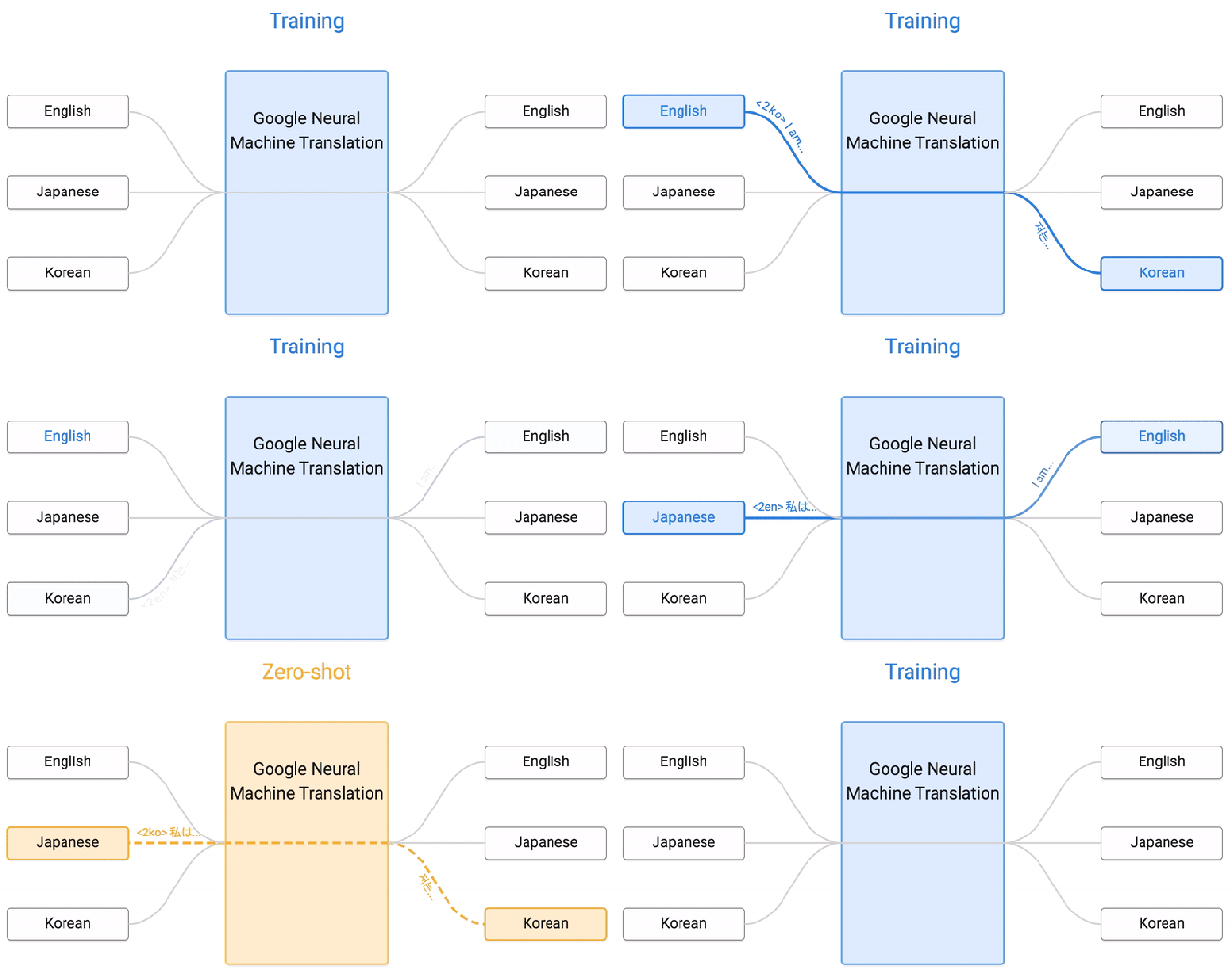
Following on this success, GNMT’s creators were curious about something. If you teach the translation system to translate English to Korean and vice versa, and also English to Japanese and vice versa… could it translate Korean to Japanese, without resorting to English as a bridge between them?

This is called zero-shot translation, illustrated below.

Indeed, Google’s AI has evolves to produce reasonable translations between two languages that it has not explicitly linked in any way.

But this raised a second question. If the computer is able to make connections between concepts and words that have not been formally linked… does that mean that the computer has formed a concept of shared meaning for those words, meaning at a deeper level than simply that one word or phrase is the equivalent of another?

n other words, has the computer developed its own internal language to represent the concepts it uses to translate between other languages? Based on how various sentences are related to one another in the memory space of the neural network, Google’s language and AI boffins think that it has.

This “interlingua” seems to exist as a deeper level of representation that sees similarities between a sentence or word in all three languages. Beyond that, it’s hard to say, since the inner processes of complex neural networks are infamously difficult to describe.

It could be something sophisticated, or it could be something simple. But the fact that it exists at all — an original creation of the system’s own to aid in its understanding of concepts it has not been trained to understand — is, philosophically speaking, pretty powerful stuff.

Google’s AI translation tool seems to have invented its own secret internal language

Thanks to Kebmodee for bringing this to the attention of the It’s Interesting community.

‘Brain wi-fi’ shown to be able to reverse leg paralysis in a primate.

By James Gallagher

An implant that beams instructions out of the brain has been used to restore movement in paralysed primates for the first time, say scientists.

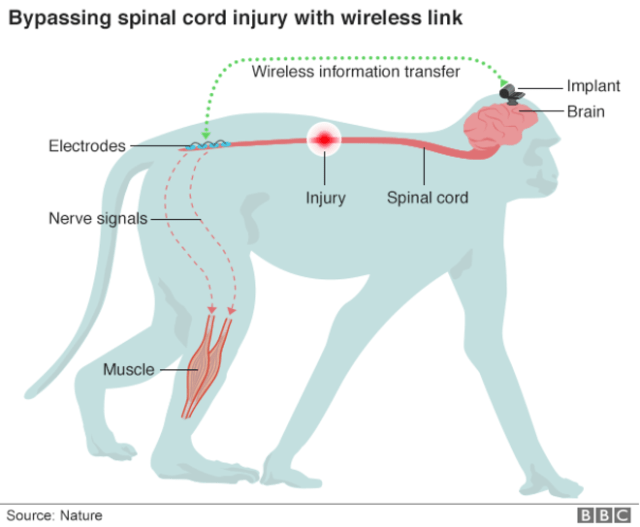
Rhesus monkeys were paralysed in one leg due to a damaged spinal cord. The team at the Swiss Federal Institute of Technology bypassed the injury by sending the instructions straight from the brain to the nerves controlling leg movement. Experts said the technology could be ready for human trials within a decade.

Spinal-cord injuries block the flow of electrical signals from the brain to the rest of the body resulting in paralysis. It is a wound that rarely heals, but one potential solution is to use technology to bypass the injury.

In the study, a chip was implanted into the part of the monkeys’ brain that controls movement. Its job was to read the spikes of electrical activity that are the instructions for moving the legs and send them to a nearby computer. It deciphered the messages and sent instructions to an implant in the monkey’s spine to electrically stimulate the appropriate nerves. The process all takes place in real time. The results, published in the journal Nature, showed the monkeys regained some control of their paralysed leg within six days and could walk in a straight line on a treadmill.

Dr Gregoire Courtine, one of the researchers, said: “This is the first time that a neurotechnology has restored locomotion in primates.” He told the BBC News website: “The movement was close to normal for the basic walking pattern, but so far we have not been able to test the ability to steer.” The technology used to stimulate the spinal cord is the same as that used in deep brain stimulation to treat Parkinson’s disease, so it would not be a technological leap to doing the same tests in patients. “But the way we walk is different to primates, we are bipedal and this requires more sophisticated ways to stimulate the muscle,” said Dr Courtine.

Jocelyne Bloch, a neurosurgeon from the Lausanne University Hospital, said: “The link between decoding of the brain and the stimulation of the spinal cord is completely new. “For the first time, I can image a completely paralysed patient being able to move their legs through this brain-spine interface.”

Using technology to overcome paralysis is a rapidly developing field:
Brainwaves have been used to control a robotic arm
Electrical stimulation of the spinal cord has helped four paralysed people stand again
An implant has helped a paralysed man play a guitar-based computer game

Dr Mark Bacon, the director of research at the charity Spinal Research, said: “This is quite impressive work. Paralysed patients want to be able to regain real control, that is voluntary control of lost functions, like walking, and the use of implantable devices may be one way of achieving this. The current work is a clear demonstration that there is progress being made in the right direction.”

Dr Andrew Jackson, from the Institute of Neuroscience and Newcastle University, said: “It is not unreasonable to speculate that we could see the first clinical demonstrations of interfaces between the brain and spinal cord by the end of the decade.” However, he said, rhesus monkeys used all four limbs to move and only one leg had been paralysed, so it would be a greater challenge to restore the movement of both legs in people. “Useful locomotion also requires control of balance, steering and obstacle avoidance, which were not addressed,” he added.

The other approach to treating paralysis involves transplanting cells from the nasal cavity into the spinal cord to try to biologically repair the injury. Following this treatment, Darek Fidyka, who was paralysed from the chest down in a knife attack in 2010, can now walk using a frame.

Neither approach is ready for routine use.

http://www.bbc.com/news/health-37914543

Thanks to Kebmodee for bringing this to the It’s Interesting community.

US military enhancing human skills with electrical brain stimulation


Study paves way for personnel such as drone operators to have electrical pulses sent into their brains to improve effectiveness in high pressure situations.

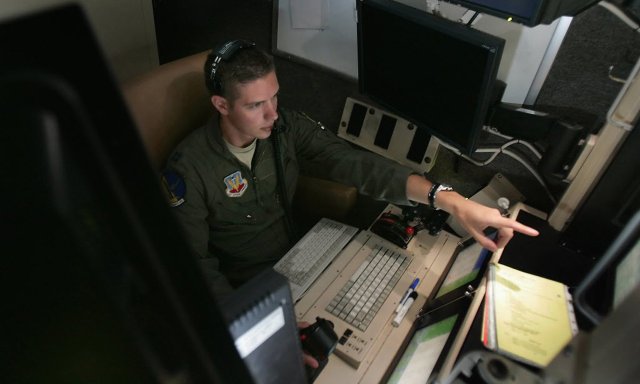
US military scientists have used electrical brain stimulators to enhance mental skills of staff, in research that aims to boost the performance of air crews, drone operators and others in the armed forces’ most demanding roles.

The successful tests of the devices pave the way for servicemen and women to be wired up at critical times of duty, so that electrical pulses can be beamed into their brains to improve their effectiveness in high pressure situations.

The brain stimulation kits use five electrodes to send weak electric currents through the skull and into specific parts of the cortex. Previous studies have found evidence that by helping neurons to fire, these minor brain zaps can boost cognitive ability.

The technology is seen as a safer alternative to prescription drugs, such as modafinil and ritalin, both of which have been used off-label as performance enhancing drugs in the armed forces.

But while electrical brain stimulation appears to have no harmful side effects, some experts say its long-term safety is unknown, and raise concerns about staff being forced to use the equipment if it is approved for military operations.

Others are worried about the broader implications of the science on the general workforce because of the advance of an unregulated technology.

In a new report, scientists at Wright-Patterson Air Force Base in Ohio describe how the performance of military personnel can slump soon after they start work if the demands of the job become too intense.

“Within the air force, various operations such as remotely piloted and manned aircraft operations require a human operator to monitor and respond to multiple events simultaneously over a long period of time,” they write. “With the monotonous nature of these tasks, the operator’s performance may decline shortly after their work shift commences.”

Advertisement

But in a series of experiments at the air force base, the researchers found that electrical brain stimulation can improve people’s multitasking skills and stave off the drop in performance that comes with information overload. Writing in the journal Frontiers in Human Neuroscience, they say that the technology, known as transcranial direct current stimulation (tDCS), has a “profound effect”.

For the study, the scientists had men and women at the base take a test developed by Nasa to assess multitasking skills. The test requires people to keep a crosshair inside a moving circle on a computer screen, while constantly monitoring and responding to three other tasks on the screen.

To investigate whether tDCS boosted people’s scores, half of the volunteers had a constant two milliamp current beamed into the brain for the 36-minute-long test. The other half formed a control group and had only 30 seconds of stimulation at the start of the test.

According to the report, the brain stimulation group started to perform better than the control group four minutes into the test. “The findings provide new evidence that tDCS has the ability to augment and enhance multitasking capability in a human operator,” the researchers write. Larger studies must now look at whether the improvement in performance is real and, if so, how long it lasts.

The tests are not the first to claim beneficial effects from electrical brain stimulation. Last year, researchers at the same US facility found that tDCS seemed to work better than caffeine at keeping military target analysts vigilant after long hours at the desk. Brain stimulation has also been tested for its potential to help soldiers spot snipers more quickly in VR training programmes.

Neil Levy, deputy director of the Oxford Centre for Neuroethics, said that compared with prescription drugs, electrical brain stimulation could actually be a safer way to boost the performance of those in the armed forces. “I have more serious worries about the extent to which participants can give informed consent, and whether they can opt out once it is approved for use,” he said. “Even for those jobs where attention is absolutely critical, you want to be very careful about making it compulsory, or there being a strong social pressure to use it, before we are really sure about its long-term safety.”

But while the devices may be safe in the hands of experts, the technology is freely available, because the sale of brain stimulation kits is unregulated. They can be bought on the internet or assembled from simple components, which raises a greater concern, according to Levy. Young people whose brains are still developing may be tempted to experiment with the devices, and try higher currents than those used in laboratories, he says. “If you use high currents you can damage the brain,” he says.

In 2014 another Oxford scientist, Roi Cohen Kadosh, warned that while brain stimulation could improve performance at some tasks, it made people worse at others. In light of the work, Kadosh urged people not to use brain stimulators at home.

If the technology is proved safe in the long run though, it could help those who need it most, said Levy. “It may have a levelling-up effect, because it is cheap and enhancers tend to benefit the people that perform less well,” he said.

https://www.theguardian.com/science/2016/nov/07/us-military-successfully-tests-electrical-brain-stimulation-to-enhance-staff-skills

Thanks to Kebmodee for bringing this to the It’s Interesting community.

Google’s AI DeepMind to get smarter by taking on video game Starcraft II

by Jeremy Kahn

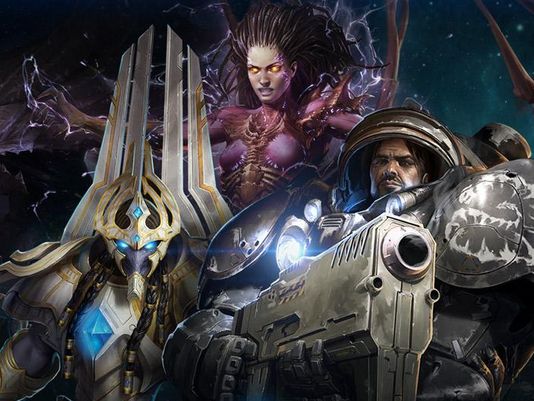
Google’s DeepMind AI unit, which earlier this year achieved a breakthrough in computer intelligence by creating software that beat the world’s best human player at the strategy game Go, is turning its attention to the sci-fi video game Starcraft II.

The company said it had reached a deal with Blizzard Entertainment Inc., the Irvine, California-based division of Activision Blizzard, which makes the Starcraft game series, to create an interface to let artificial intelligence researchers connect machine-learning software to the game.

London-based DeepMind, which Google purchased in 2014, has not said it has created software that can play Starcraft expertly — at least not yet. “We’re still a long way from being able to challenge a professional human player,” DeepMind research scientist Oriol Vinyals said in a blog post Friday. But the company’s announcement shows it’s looking seriously at Starcraft as a candidate for a breakthrough in machine intelligence.

Starcraft fascinates artificial intelligence researchers because it comes closer to simulating “the messiness of the real world” than games like chess or Go, Vinyals said. “An agent that can play Starcraft will need to demonstrate effective use of memory, an ability to plan over a long time and the capacity to adapt plans to new information,” he said, adding that techniques required to create a machine-learning system that mastered these skills in order to play Starcraft “could ultimately transfer to real-world tasks.”

Virtual Mining

In the game, which is played in real-time over the internet, players choose one of three character types, each of which has distinct strengths and weaknesses. Players must run an in-game economy, discovering and mining minerals and other commodities in order to conquer new territory.A successful player needs to remember large volumes of information about places they’ve scouted in the past, even when those places are not immediately observable on their screen.

The player’s view of what an opposing player is doing is limited — unlike chess or Go where opponents can observe the whole board at one time. Furthermore,unlike in a game where players take turns, a machine-learning system has to deal with an environment that is constantly in flux. Starcraft in particular also requires an ability to plan both a long-term strategy and make very quick tactical decisions to stay ahead of an opponent — and designing software that is good at both types of decision-making is difficult.

Facebook, Microsoft

Researchers at Facebook Inc. and Microsoft Corp. have also published papers on ways to interface artificial intelligence systems with earlier versions of Starcraft. And some Starcraft-playing bots have already been created, but so far these systems have not been able to defeat talented human players.

Microsoft Chief Executive Officer Satya Nadella has taken swipes at Google’s focus on games in its AI research, telling the audience at a company event in Atlanta in September that Microsoft was “not pursuing AI to beat humans at games” and that Microsoft wanted to build AI “to solve the most pressing problems of our society and economy.”

Games have long-served as important tests and milestones for artificial intelligence research. In the mid-1990s, International Business Machines Corp.’s supercomputer Deep Blue defeated world chess champion Garry Kasparov on several occasions. IBM’s Watson artificial intelligence beat top human players in the game show Jeopardy in 2011, an achievement that showcased IBM’s strides in natural language processing. In 2015, DeepMind developed machine learning software that taught itself how to play dozens of retro Atari games, such as Breakout, as well or better than a human. Then, in March of 2016, DeepMind’s Alpha Go program, trained in a different way, defeated Go world champion Lee Sodol.

In the twenty years since Starcraft debuted, the game has acquired a massive and devoted following. More than 9.5 million copies of the original game were sold within the first decade of its release, with more than half of those being sold in Korea, where the game was especially popular. Starcraft II shattered sales records for a strategy game when it was released in 2010, selling 1.5 million copies within 48 hours. Pitting two players against one another in real-time, Starcraft was a pioneer in professional video game competitions and remains an important game in the world of e-sports, although its prominence has since been eclipsed by other games.

http://www.detroitnews.com/story/business/2016/11/05/deepmind-master-go-takes-video-game-starcraft/93370028/

An Uber Self-Driving Truck Just Took Off With 50,000 Beers

BY VANESSA BATES RAMIREZ

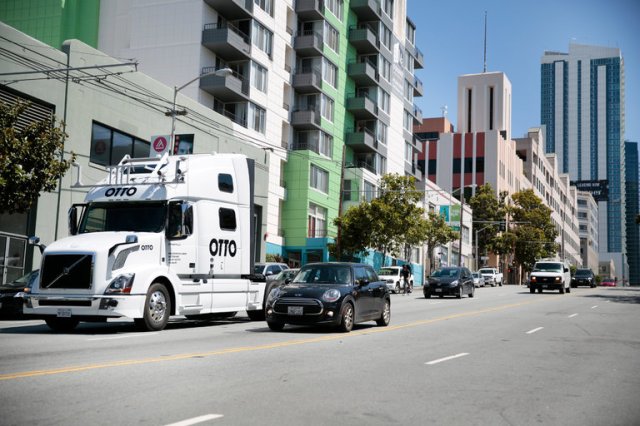
Drivers on Colorado’s interstate 25 may have gotten a good scare last Thursday, and it wasn’t a Halloween prank—glancing into the cab of an Otto 18-wheeler loaded with a beer delivery, they’d have been stunned to notice there was no one at the wheel.

In the first-ever commercial shipment completed using self-driving technology, the truck drove itself 120 miles from Fort Collins to Colorado Springs while its human driver sat in the sleeper cab. The driver did have control of the truck from departure until it got on the highway, and took over again when it was time to exit the highway.

Uber acquired Otto in August for $680 million. The company partnered with Anheuser-Busch for its first autonomous delivery, which consisted of 50,000 cans of beer—cargo many would consider highly valuable.

How the trucks work

Because of the relatively constant speed and less-dense surroundings, highway driving is much simpler for a driverless vehicle than city driving. There are no stop signs or pedestrians to worry about, and it’s not even necessary to change lanes if the delivery’s not on a tight schedule.

To switch from human driver to self-driving mode, all the driver had to do was press a button labeled “engage,” and this kicked the truck’s $30,000 of retro-fitted technology into action: there are three lidars mounted on the cab and trailer, a radar attached to the bumper, and a high-precision camera above the windshield.

The company made sure to plan the trip at a low-traffic time and on a day with clear weather, carefully studying the route to make sure there wouldn’t be any surprises the truck couldn’t handle along the way.

Why they’re disruptive

Though self-driving cars certainly get more hype than self-driving trucks do, self-driving truck are currently more necessary and could have an equally disruptive, if not larger, effect on the economy. Anheuser-Busch alone estimates it could save $50 million a year (and that’s just in the US) by deploying autonomous trucks across its distribution network.

Now extrapolate those savings over the entire trucking industry, extending the $50 million estimate to every company that delivers a similar volume of cargo throughout the US via trucks. The total easily leaps into the billions.

But what about all those jobs?

This doesn’t mean the company would fire all its drivers; savings would come from primarily from reduced fuel costs and a more efficient delivery schedule.

As of September 2016, the trucking industry employed around 1.5 million people, and 70 percent of cargo in the US is moved by trucks, with total freight tonnage predicted to grow 35% over the next ten years.

That’s a lot of freight. And as it turns out, the industry is sorely lacking in drivers to move it. The American Trucking Association estimates its current shortfall of drivers at 48,000. So rather than displacing jobs, autonomous trucking technology may actually help lift some of the burden off a tightly-stretched workforce.

Rather than pulling over to sleep when they get tired, drivers could simply time their breaks to coincide with long stretches of highway, essentially napping on the job and saving valuable time, not to mention getting their deliveries to their destinations faster.

In an interview with Bloomberg, Otto president and co-founder Lior Ron assured viewers that trucking jobs aren’t going anywhere anytime soon: “The future is really those drivers becoming more of a copilot to the technology, doing all the driving on city streets manually, then taking off onto the highway, where the technology can help drive those long and very cumbersome miles… for the foreseeable future, there’s a driver in the cabin and the driver is now safer, making more money, and can finish the route faster.”

Besides taking a load off drivers, self-driving trucks will likely make the roads far safer. According to the Insurance Institute for Highway Safety, about one in ten highway deaths occurs in a crash involving a large truck, and over 3,600 people were killed in large truck crashes in 2014.

The biggest culprit? Human error.

It’s not a done deal just yet

Otto’s trucks are considered to be in the Level 4 group of autonomous vehicles, which means human drivers are unnecessary in reasonably-controlled environments; on the highway, drivers can actually take a nap if they want to. In comparison, Tesla’s Autopilot system is considered Level 2, meaning it helps the driver by maintaining speed and avoiding obstacles, but the driver still needs to be engaged and paying close attention.

Besides the fact that the technology has a ways to go before being ready for large-scale deployment, barriers like regulation and plain old resistance to change could slow things down.

Drivers interviewed for a New York Times article were far from endorsing the co-pilot idea, due both to safety concerns and the degree to which self-driving technology would change the nature of their jobs.

If it were me, I know a whole lot of testing would have to be done before I’d be okay with falling asleep inside a vehicle moving at 60 miles an hour without a driver.

Once the technology’s been proven to a fail-proof rate, however, truckers may slowly adapt to the idea of being able to drive 1,200 miles in the time it used to take to drive 800.

An Uber Self-Driving Truck Just Took Off With 50,000 Beers

The world’s knowledge is being buried in a salt mine: the Memory of Mankind project

By Richard Gray

Etched with strange pictograms, lines and wedge-shaped markings, they lay buried in the dusty desert earth of Iraq for thousands of years. The clay tablets left by the ancient Sumerians around 5,000 years ago provide what are thought to be the earliest written record of a long dead people.

Although it took decades for archaeologists to decipher the mysterious language preserved on the slabs, they have provided glimpses of what life was like at the dawn of civilisation.

Similar tablets and carved stones have been unearthed at the sites of other mighty cultures that have long since vanished – from the hieroglyphics of the Ancient Egyptians to the inscriptions of the Maya of Mesoamerica.

The stories and details they contain have stood the test of time, surviving through the millennia to be unearthed and deciphered by modern historians. But there are fears that future archaeologists may not benefit from the same sort of immutable record when they come to search for evidence of our own civilisation. We live in a digital world where information is stored as lists of tiny electronic ones and zeros that can be edited or even wiped clean by a few accidental strokes on a keyboard. “Unfortunately we live in an age that will leave hardly any written traces,” explained Martin Kunze.

Kunze’s solution is the Memory of Mankind project, a collaboration between academics, universities, newspapers and libraries to create a modern version of those first ancient Sumerian tablets discovered in the desert. Their plan is to gather together the accumulated knowledge of our time and store it underground in the caverns carved out in one of the oldest salt mines in the world, in the mountains of Austria’s picturesque Salzkammergut. “The main point of what we are doing is to store information in a way that it is readable in the future. It is a backup of our knowledge, our history and our stories,” says Kunze.

Creating a stone “time capsule” may seem archaic in the age where most of our knowledge now floats around the internet cloud, but a slide back into the technological dark ages is not beyond comprehension. The advent of the internet has seen people have more information at their fingertips than at any previous point in human history. Yet the huge repositories of knowledge we have built up are perilously vulnerable.

Ever more information is being stored digitally on remote computer servers and hard disks. How many of us have hard copies of the photographs we took on our last holiday, for example.

The situation gets more serious when we consider scientific papers that are now solely published online. Entire catalogues of video footage from news broadcasters, television and film are stored digitally. Official documents and government papers reside in digital libraries.

Yet a conference of space weather scientists, together with officials from Nasa and the US Government, earlier this year warned of the fragile nature of all this digital information. Charged particles thrown out by the sun in a powerful solar storm could trigger electromagnetic surges that could render our electronic devices useless and wipe data stored in memory drives.

Such storms are a real threat, and they happen relatively regularly. A report produced by the British Government last year highlighted that severe solar storms appear to happen every 100 years.

The last major coronal mass ejection to hit the Earth, known as the Carrington event, was in 1859 and is thought to have been the biggest in 500 years. It blew telegraph systems all over the world and pylons threw sparks. In the age of the internet, such an event would be catastrophic.

But there are other threats too – malicious hackers or even careless officials could tamper with these digital records or delete them altogether. And what if we simply lose the ability to read this information? Technology is changing so fast that media formats are quickly rendered obsolete. Minidiscs, VHS and the humble floppy disk have become outdated within decades.

Few computers even come with DVD drives now, while giving the current generation of teenagers a floppy disk would leave them flummoxed. If information is stored on one of these formats and the technology needed to access it disappears completely, then it could be lost forever.

Hence the desire to keep a hard copy of our most important documents. Unfortunately, even the more traditional forms of storing information are also unlikely to keep information safe for more than a few centuries. While we have some paper manuscripts that have survived for hundreds of years – and in the case of papyrus scrolls, for thousands – unless they are stored in the right conditions, most disintegrate to dust after a couple of hundred years. Newspaper can decompose within six weeks if it gets wet.

“It is very likely that in the long term the only traces of our present activities will be global warming, nuclear waste and Red Bull cans,” says Kunze. “The amount of data is inflating rapidly, so the real challenge becomes selecting what we want to keep for our grandchildren and those that come after them.”

Which is why Kunze and his colleagues are instead looking further back in time for inspiration, to those Sumerian stone tablets. The Memory of Mankind team hopes to create an indelible record of our way of life by imprinting official documents, details about our culture, scientific papers, biographies, popular novels, news stories and even images onto square ceramic plates measuring eight inches (20cm) across.

This hinges on a special process that Kunze describes as “ceramic microfilm”, which he says is the most durable data storage system in the world. The flat ceramic plates are covered with a dark coating and a high energy laser is then used to write into them.

Each of these tablets can hold up to five million characters – about the same as a four-hundred-page book. They are acid- and alkali-resistant and can withstand temperatures of 1300C. A second type of tablet can carry colour pictures and diagrams along with 50,000 characters before being sealed with a transparent glaze.

The plates are then stacked inside ceramic boxes and tucked into the dark caverns of a salt mine in Hallstatt, Austria. As a resting place for what could be described as the ultimate time capsule, it is impressive. In the right light the walls still glisten with the remnants of salt, which extracts moisture and desiccates the air.
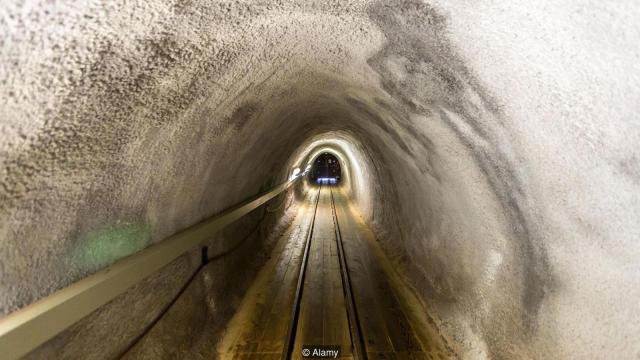
The salt itself has a Plasticine-like property that helps to seal fractures and cracks, keeping the tomb watertight. Buried beneath millions of tonnes of rock, the records will be able to survive for millennia and perhaps even entire ice ages, Kunze believes.

In some distant future after our own civilisation has vanished, they could prove invaluable to any who find them. They could help resurrect forgotten knowledge for cultures less advanced than our own, or provide a wealth of historical information for more advanced civilisations to ensure our own achievements, and our mistakes, can be learned from.

But it could also have value in the shorter term too.

“We are trying to create something that will not only be a collection of information for a distant future, but it will also be a gift for our grandchildren,” says Kunze. “Memory of Mankind can serve as a backup of knowledge in case of an event like war, a pandemic or a meteorite that throws us back centuries within two or three generations. A society can lose skills and knowledge very quickly – in the 6th Century, Europe largely lost the ability to read and write within three generations.”

Already the Memory of Mankind archive contains an eclectic glimpse of our society. Among the information etched into the ceramic plates are books summarising the history of individual countries around the world. Towns and villages have also opted to include their own local histories. A thousand of the world’s most important books – chosen by combining published lists using an algorithm developed by the University of Vienna – will be cut into the coating on the ceramic plates.

Museums are including images of precious objects in their collections along with descriptions of what we have learned about them. The Krumau Madonna – a sculpture dating to the late 14th Century currently sitting in the Museum of Art History in Vienna – is already there, along with paintings by the Baroque artists Peter Paul Rubens and Anthony van Dyck.

There are plates featuring pictures of fossils – dinosaurs, prehistoric fish and extinct ammonites – alongside a description of what we know about them. Even our current understanding of our own origins are included, with pictures of one of the earliest examples of sculpture ever found – the Venus of Willendorf.
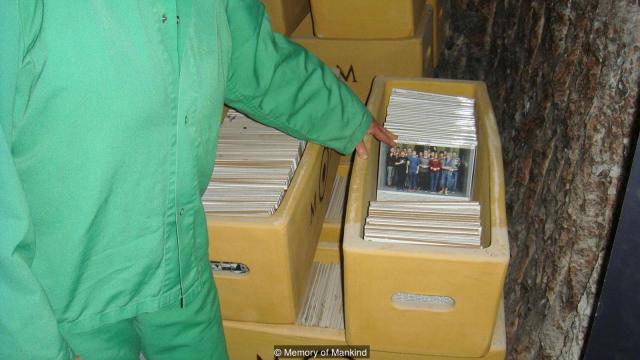
Much of the material included on the tablets is in German, but there are tablets in English, French and other languages.

A handful of celebrities have also found themselves immortalised in the salt-lined vaults. Baywatch star and singer David Hasselhoff has a particularly lengthy entry as does German singer Nena who had a hit with 99 Red Balloons in the 1980s. Nestled among them is a plate detailing the story of Edward Snowden and his leak of classified material from the US National Security Agency.

The University of Vienna has been placing prize winning PhD dissertations and scientific papers onto the tablets. Included in the archive are plates describing genetic modification and bioengineering patents, explaining what today’s scientists have achieved and how they managed it.

And alongside research, everyday objects like washing machines, smartphones and televisions are also being documented as a record of what life is like today.

The plates also serve as a warning for future generations – with sites of nuclear waste dumps pinpointed so future generations might know to avoid them or to clean them up if they have the technology. Newspapers have been asked to send their daily editorials to provide a repository of opinions as well as facts.

In many ways, the real problem is what not to include. “We probably have about 0.1% of the antique literature yet in the modern world publishing is as easy as posting something on the internet or sending a tweet,” explains Kunze. “Publications about science, space flight and medicine – the things we really spend money on – drown in the mass of data we produce. The Large Hadron Collider produces something like 30 Petabytes of data a year, but this is equal to just 0.003% of annual internet traffic. “A random fragment of 0.1% of our present day data will result in a very distorted view of our time.”

To tackle this, Kunze and his colleagues are organising a conference in November next year to bring scientists, historians, archaeologists, linguists and philosophers together to create a blueprint for selecting content for the project. The team also hope to immortalise glimpses of mundane, everyday life as members of the public are encouraged to create tablets of their own. “We are saving cooking recipes and stories of love and personal events,” adds Kunze. “On one plate, a little girl has included three photographs of her confirmation and written a short bit of text about it. They give a glimpse of everyday life that will be very valuable.”

Preserved tweets

Memory of Mankind is not the only project to face the daunting task of preserving humanity’s accumulated knowledge. Librarians around the world are also looking at the knotty problem of how to save the information from the modern age.

The University of California Los Angeles, for instance, is archiving tweets related to major events and preserving them in their own archives. “We are collecting tweets from Cairo on the day of the January 25th revolution for example,” explained Todd Grappone, associate university librarian. “We are then translating them into multiple languages and saving them in file formats that are likely to be robust for the future. We are only doing it digitally at the moment as we have something like 1,000 cellphone videos from that event alone, but the value of that is enormous.”

Another project, called the Human Document Project, is aiming to record information on wafers of tungsten/silicon nitride. Initially they have been etching them with dozens of tiny QR codes – a type of two-dimensional barcode – which can be read using smartphones, but they say the final disks will hold information written in a form that can be read using a microscope.

Leon Abelmann, a researcher at Twente University in Enschede, the Netherlands, is one of the driving forces behind the project. He says that they are hoping to produce something that will be able to survive for one million years and are now starting to collaborate with the Memory of Mankind. “We would be really happy if we found information left for us by an intelligence that has already been extinct for a million years,” he said. “So we think future intelligent beings will be too. The mere fact that we need to take a helicopter view of ourselves will hopefully make us realise that the differences between us are trivial.”

Buried under a mountain, it may seem unlikely that any future generations would be able to find these tablets. For this reason, Memory of Mankind will has engraved some small tokens with a map pinpointing the archives’ location, which they will then bury at strategic places around the world. Other tokens are being entrusted to 50 holders who will pass them onto the next generation.
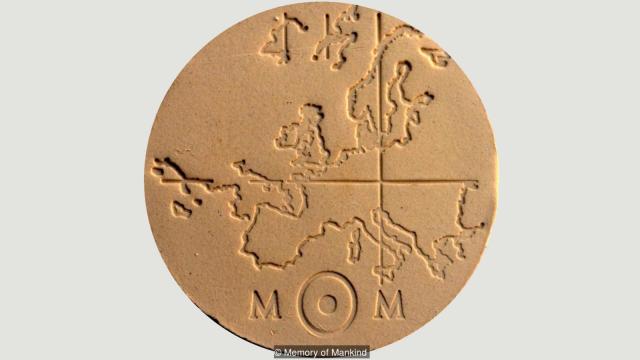
To ensure those who do find it can actually read what is in there, the Memory of Mankind team has been creating their own Rosetta Stone – thousands of images labelled with their names and meanings.

All of which gives a hint at the ambition of what they are trying to do. The individuals who unearth this gold-mine of knowledge could be very different from our own. In a few thousand years civilisation may have advanced beyond our reckoning or descended back to the dark ages. Perhaps it will not even be humans who end up uncovering our memories. “We could be looking at some other form of intelligent life,” adds Kunze.

We will never know what those future archaeologists will make of our civilisation when they wipe the dust away from the tablets in thousands of years’ time, but we can hope that like the ancient Sumarians, we will not be forgotten.

http://www.bbc.com/future/story/20161018-the-worlds-knowledge-is-being-buried-in-a-salt-mine

Thanks to Kebmodee for bringing this to the It’s Interesting community.

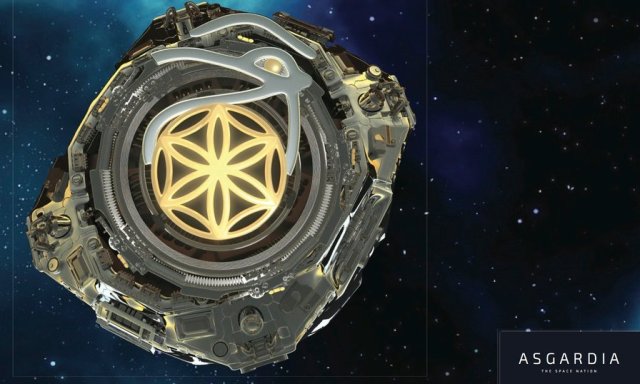
Scientists Create Asgardia, the First Ever Nation in Space, and You Can Join

by Paul Ratner

If you had enough of the often-depressing world events and the seemingly unresolvable conflicts they engender, you might want to head for space and join the first-ever “nation state in space” that’s been announced by a team of scientists and legal experts. It’s called Asgardia and anyone can become its citizen.

As the site for the project explains (http://asgardia.space/concept), Asgardia is a name that comes from Norse mythology, where Asgard was the name of a city in the sky. In the Marvel universe, Asgardia was built was Tony Stark and ruled by the All-Mother (since Odin was in exile).

Asgardia is the brain-child of the accomplished Russian scientist and businessman Igor Ashurbeyli, who describes the motivation behind this endeavor as an attempt to create a nation founded on “Peace in Space, and the prevention of Earth’s conflicts being transferred into space.” The idea is to create a “mirror of humanity in space” in low-Earth orbit that would be devoid of Earthly divisions based on borders and religions. As Ashurbeyli says: “In Asgardia we are all just Earthlings!”

Besides avoiding Earth-linked divisions, another key goal for the nation would be to protect Earth from space threats, like comets, asteroids, debris, cosmic radiation and infection by extraterrestrial microorganisms.

To make this space nation a reality, Ashurbeyli wants it to achieve recognition from the United Nations, aiming to have a million people sign up to become the new country’s citizens via their website. The initial citizens are likely to be those who work in the space industry already, but anyone can join. The initial goal for the founders was to get 100,000 citizens to sign up, but the number of interested people hit 300K in less than a week and is going up rapidly.

The next step for Asgardia – launching its first satellite in 2017. This will become its first outpost in space, while its citizens will still be Earth-bound. A space station would eventually follow.

As Igor Ashurbeyli explained to the Guardian:

“Physically the citizens of that nation state will be on Earth; they will be living in different countries on Earth, so they will be a citizen of their own country and at the same time they will be citizens of Asgardia.”

The new country will be democratic but not ruled by Earthly laws or the existing space laws. Its founders envision the need for a new “‘Universal space law’ and ‘astropolitics’.

“The existing state agencies represent interests of their own countries and there are not so many countries in the world that have those space agencies,” elaborated Ashurbeyli. “The ultimate aim is to create a legal platform to ensure protection of planet Earth and to provide access to space technologies for those who do not have that access at the moment.”

Whether this effort succeeds, especially in light of the existing space treaty, is of course open to debate, while legal minds are not dismissing it outright.

The Asgardia team’s legal expert Ram Jakhu, the director of McGill University’s Institute of Air and Space Law in Montreal, told Space.com their plan is for Asgardia to have the minimum number of citizens, a government, and an inhabited spacecraft that would be its territory. This would hit 3 of the 4 criteria by the U.N. to become a nation state. The last hurdle is recognition by other U.N. members.

To learn more about Asgardia, to sign up as one of its first citizens, or to come up with the new space nation’s flag and anthem, head here: http://asgardia.space/

http://bigthink.com/paul-ratner/scientists-create-asgardia-the-first-ever-nation-in-space-and-you-can-join?utm_source=Big+Think+Weekly+Newsletter+Subscribers&utm_campaign=4767e83d52-Newsletter_10192016&utm_medium=email&utm_term=0_6d098f42ff-4767e83d52-41106061

New advances in quantum artificial intelligence could lead to super-smart machines

by Bryan Nelson

Quantum physics has some spooky, anti-intuitive effects, but it could also be essential to how actual intuition works, at least in regards to artificial intelligence.

In a new study, researcher Vedran Dunjko and co-authors applied a quantum analysis to a field within artificial intelligence called reinforcement learning, which deals with how to program a machine to make appropriate choices to maximize a cumulative reward. The field is surprisingly complex and must take into account everything from game theory to information theory.

Dunjko and his team found that quantum effects, when applied to reinforcement learning in artificial intelligence systems, could provide quadratic improvements in learning efficiency, reports Phys.org. Exponential improvements might even be possible over short-term performance tasks. The study was published in the journal Physical Review Letters.

“This is, to our knowledge, the first work which shows that quantum improvements are possible in more general, interactive learning tasks,” explained Dunjko. “Thus, it opens up a new frontier of research in quantum machine learning.”

One of the key quantum effects in regards to learning is quantum superposition, which potentially allows a machine to perform many steps simultaneously. Such a system has vastly improved processing power, which allows it to compute more variables when making decisions.

The research is tantalizing, in part because it mirrors some theories about how biological brains might produce higher cognitive states, possibly even being related to consciousness. For instance, some scientists have proposed the idea that our brains pull off their complex calculations by making use of quantum computation.

Could quantum effects unlock consciousness in our machines? Quantum physics isn’t likely to produce HAL from “2001: A Space Odyssey” right away; the most immediate improvements in artificial intelligence will likely come in complex fields such as climate modeling or automated cars. But eventually, who knows?

You probably won’t want to be taking a joyride in an automated vehicle the moment it becomes conscious, if HAL is an example of what to expect.

“While the initial results are very encouraging, we have only begun to investigate the potential of quantum machine learning,” said Dunjko. “We plan on furthering our understanding of how quantum effects can aid in aspects of machine learning in an increasingly more general learning setting. One of the open questions we are interested in is whether quantum effects can play an instrumental role in the design of true artificial intelligence.”

http://www.mnn.com/green-tech/research-innovations/stories/quantum-artificial-intelligence-could-lead-super-smart-machines

Paralyzed man’s robotic arm gains a sense of touch and shakes Obama’s hand

by Lorenzo Tanos

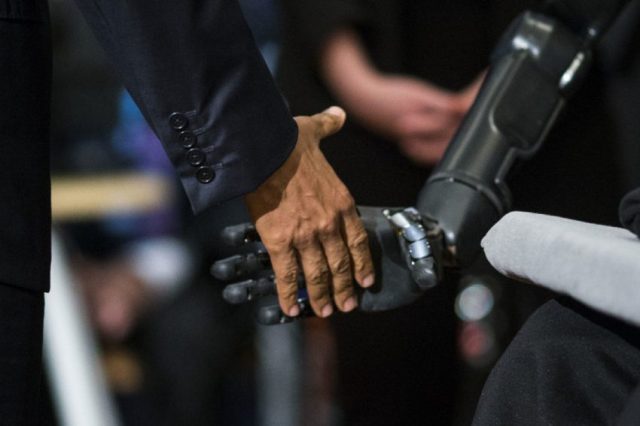
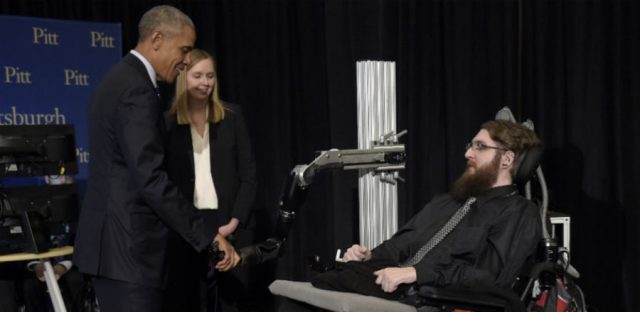
The mind-controlled robotic arm of Pennsylvania man Nathan Copeland hasn’t just gotten the sense of touch. It’s also got to shake the hand of the U.S. President himself, Barack Obama.

Copeland, 30, was part of a groundbreaking research project involving researchers from the University of Pittsburgh and the University of Pittsburgh Medical Center. In this experiment, Copeland’s brain was implanted with microscopic electrodes — a report from the Washington Post describes the tiny particles as being “smaller than a grain of sand.” With the particles implanted into the cortex of the man’s brain, they then interacted with his robotic arm. This allowed Copeland to gain some feeling in his paralyzed right hand’s fingers, as the process worked around the spinal cord damage that robbed him of the sense of touch.

More than a decade had passed since Copeland, then a college student in his teens, had suffered his injuries in a car accident. The wreck had resulted in tetraplegia, or the paralysis of both arms and legs, though it didn’t completely rob the Western Pennsylvania resident of the ability to move his shoulders. He then volunteered in 2011 for the University of Pittsburgh Medical Center project, a broader research initiative with the goal of helping paralyzed individuals feel again. The Washington Post describes this process as something “even more difficult” than helping these people move again.

For Nathan Copeland, the robotic arm experiment has proven to be a success, as he’s regained the ability to feel most of his fingers. He told the Washington Post on Wednesday that the type of feeling does differ at times, but he can “tell most of the fingers with definite precision.” Likewise, UPMC biomedical engineer Robert Gaunt told the publication that he felt “relieved” that the project allowed Copeland to feel parts of the hand that had no feeling for the past 10 years.

Prior to this experiment, mind-controlled robotic arm capabilities were already quite impressive, but lacking one key ingredient – the sense of touch. These prosthetics allowed people to move objects around, but since the individuals using the arms didn’t have working peripheral nerve systems, they couldn’t feel the sense of touch, and movements with the robotic limbs were typically mechanical in nature. But that’s not the case with Nathan Copeland, according to UPMC’s Gaunt.

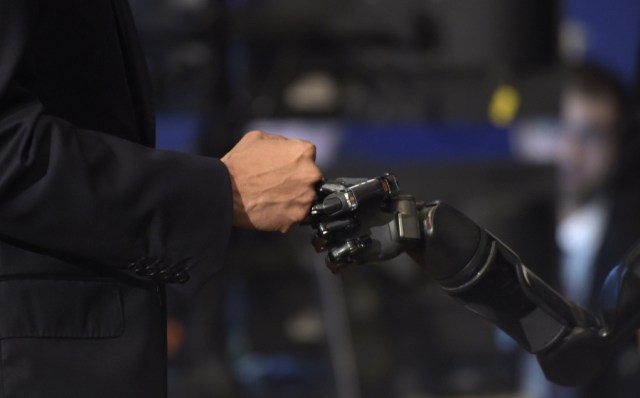
“With Nathan, he can control a prosthetic arm, do a handshake, fist bump, move objects around,” Gaunt observed. “And in this (study), he can experience sensations from his own hand. Now we want to put those two things together so that when he reaches out to grasp an object, he can feel it. … He can pick something up that’s soft and not squash it or drop it.”

But it wasn’t just ordinary handshakes that Copeland was sharing on Thursday. On that day, he had exchanged a handshake and fist bump with President Barack Obama, who was in Pittsburgh for a White House Frontiers Conference. And Obama appeared to be suitably impressed with what Gaunt and his team had achieved, as it allowed Copeland’s robotic arm and hand to have “pretty impressive” precision.

“When I’m moving the hand, it is also sending signals to Nathan so he is feeling me touching or moving his arm,” said Obama.

Unfortunately, Copeland won’t be able to go home with his specialized prosthesis. In a report from the Associated Press, he said that the experiment mainly amounts to having “done some cool stuff with some cool people.” But he nonetheless remains hopeful, as he believes that his experience with the robotic arm will mark some key advances in the quest to make paralyzed people regain their natural sense of touch.

Read more at http://www.inquisitr.com/3599638/paralyzed-mans-robotic-arm-gets-to-feel-again-shakes-obamas-hand/#xVzFDHGXukJWBV05.99