
This website lets you slide a bar to compare satellite images of Japan before and after the destruction.

This website lets you slide a bar to compare satellite images of Japan before and after the destruction.
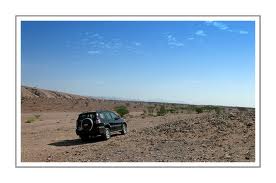
People are blindly trusting their GPS, and sometimes getting into trouble. In Augst 2009, an 11 year old boy died after his mom followed their GPS navigator into Death Valley and they got stranded on a deserted road.
Read about this phenomenon here: http://seattletimes.nwsource.com/html/travel/2014309399_trgpsdanger27.html
Thanks to WRP for bringing this to the attention of the It’s Interesting community.
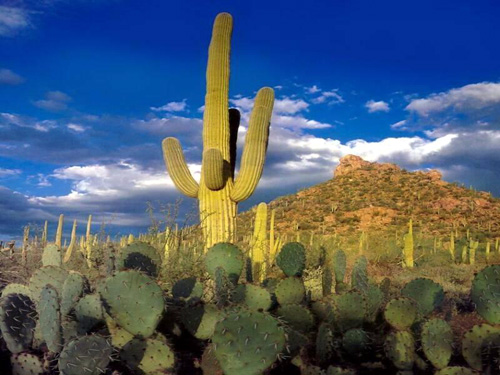
He took a wrong turn an ended up spending 5 nights alone in the Arizona desert, eating leftovers, drinking windshield washer fluid and praying.
Read more: http://www.upi.com/Top_News/US/2011/02/16/Man-84-survives-5-days-in-Arizona-desert/UPI-43101297867890/#ixzz1E934QMeU
[Youtube=http://www.youtube.com/watch?v=SYuHmXyLasY]
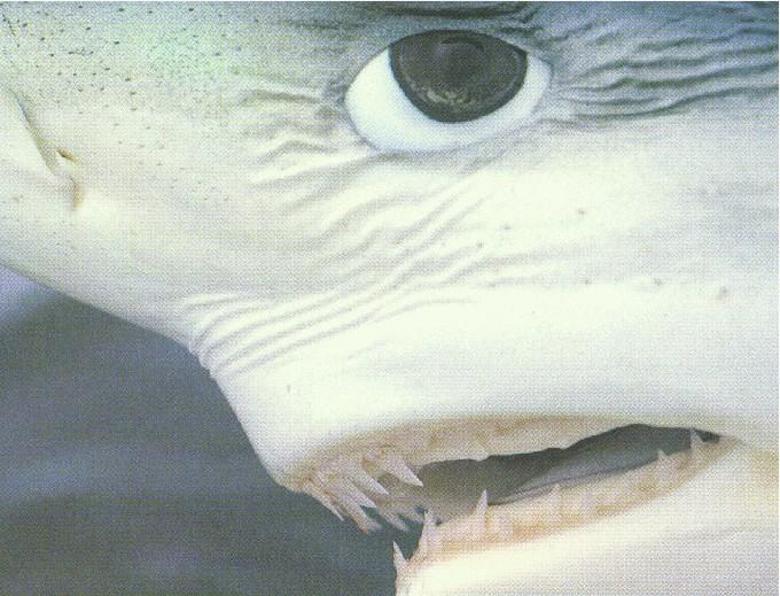
Scientists from Australia have used spectrophotometry to examine the light-sensitive cells in shark eyes. In contrast to the 3 types of photoreceptors we humans have for red, green and blue, sharks only have one type of photoreceptor, suggesting that they can’t distinguish colors. Sharks probably visualize their world in terms of assessing contrast against background. Thus, it may be possible to design swimming gear, boats, and fishing gear that are less likely to catch a shark’s eye.
Read about it here in the news: http://latimesblogs.latimes.com/outposts/2011/01/sharks-are-color-blind-shark-attacks.html
and here is the original scientific article recently published: http://www.springerlink.com/content/05427357r3uw8q35/
Here are a couple video clips showing shark attacks. The 1st is of some idiots standing in shark infested water, and the 2nd is a scuba diver attacked by a Great White shark.

NASA and its top scientists disavowed the work by noon Monday.
The holes interepreted as bacterial fossils could have been caused by contamination on Earth.
The study wasn’t reviewed by peers.
The editor of the journal acknowledged that they were prompted to publish it in hopes of attracting a buyer.
“There has been no one in the scientific community, certainly no one in the meteorite analysis community, that has supported these conclusions,” NASA Astrobiology Institute Director Carl Pilcher said Monday of the latest work.
http://m.apnews.com/ap/db_16026/contentdetail.htm?contentguid=r33uY5F7

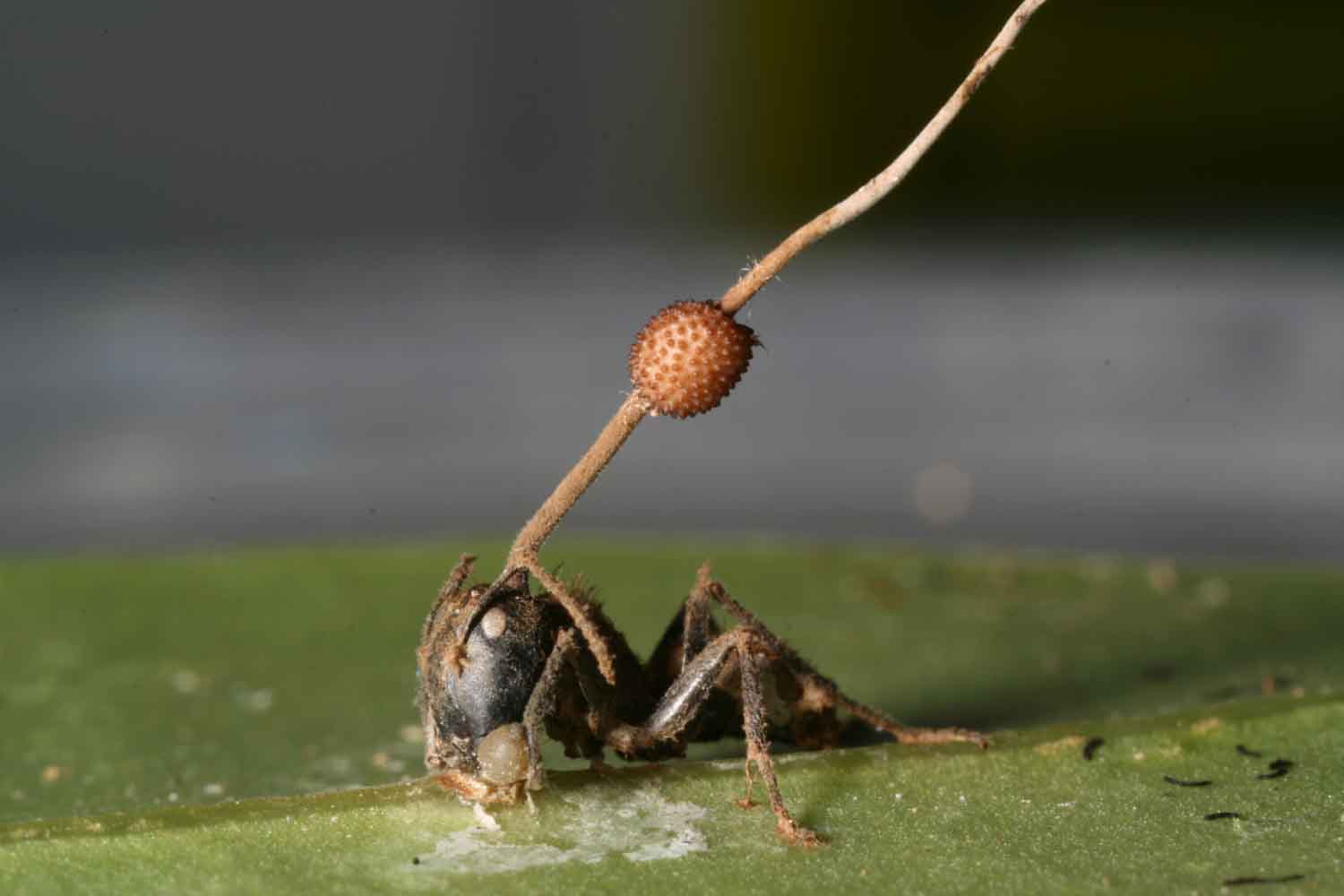
For at least 48 million years, the fungus Ophiocordyceps unilateralis has been taking over the minds of infected ants, making them desert their colonies and move to leaves that provide the ideal conditions for the parasite to reproduce.
http://www.guardian.co.uk/science/2010/aug/18/zombie-carpenter-ant-fungus
Thanks to Kebmodee for bringing this to the attention of the Its-Interesting community.

Dr. Richard Hoover of NASA/Marshall Space Flight Center has discovered fossils similar to cyanobacteria from Earth inside meteorites, bolstering the hypothesis held by many scientists that life is widely distributed throughout the universe, and that life here on Earth may have come from other planets.
read about it here: http://journalofcosmology.com/Life100.html
and here: http://news.cnet.com/8301-17852_3-20039647-71.html
Thanks to kebmodee for bringing this to the attention of the Its-Interesting community.
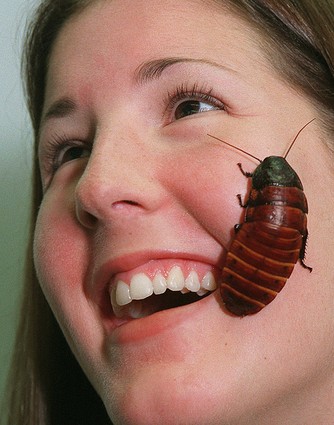
According to the Bronx Zoo, “Flowers wilt. Chocolates melt. Roaches are forever.”
This year the Bronx Zoo is exhibiting 58,000 giant Madagascar hissing roaches, and offering Valentine’s Day naming rights for $10 apiece.
http://www.bronxzoo.com/name-a-roach/
Could there be at beter way to let your loved one know how you feel on this special day?
The Wildlife Conservation Society, which runs the Bronx Zoo, suggests “Maybe it’s in recognition of your one and only’s virility, or strength in the face of high radiation.”
The roaches, which are native to the island of Madagascar off the south-eastern coast of Africa, are not pests and do not inhabit human dwellings. In fact, they are actually popular pets because of their hissing sound, large size, and appearance.
They generate their hissing sound by forcing air through breathing pores on each segment of their thorax and abdomen. They are believed to be the only insect that can “growl” in this manner.
Their hiss takes three forms: the disturbance hiss, the female-attracting hiss, and the fighting hiss. All cockroaches can generate the disturbance hiss, and only males use the fighting hiss (when challenged by other males). The fighting hiss is used to establish a dominance hierarchy by one of the males backing down and the fight being over. Males hiss more often than females. The males are also known to ram one another with their horns and shove one another about with their abdomens during competition for standing in the roach hierarchy.

The Earth’s north magnetic pole is slowly moving towards Russia, and Tampa airport had to readjust.
http://www.aolnews.com/2011/01/07/magnetic-north-pole-shift-affects-tampa-airport/
Nat Geo explains why this is happening: http://news.nationalgeographic.com/news/2009/12/091224-north-pole-magnetic-russia-earth-core.html
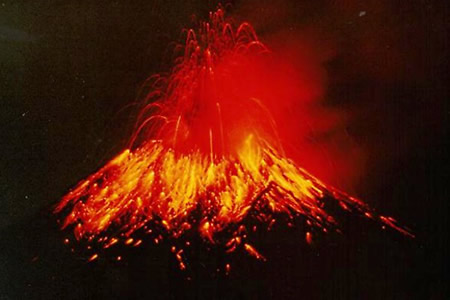
Supervolcanos produce eruptions with ejecta greater than 1,000 cubic kilometers (240 cubic miles) – thousands of times larger than most historic volcanic eruptions. Supervolcanoes occur when magma rises into the crust from a hotspot but is unable to break through that crust until pressure builds to a phenomenally high level. Yellowstone National Park is a supervolcano that last erupted 640,000 years ago.
http://dsc.discovery.com/convergence/supervolcano/supervolcano.html
Some scientists are worried that we’re overdue for another eruption. The floor of the Yellowstone supervolcano has risen 3 inches a year for the past 3 years, the fastest rate since records began in 1923.
http://www.earthmountainview.com/yellowstone/yellowstone.htm
Here’s what National Geographic predicts will happen when Yellowstone explodes:
http://ngm.nationalgeographic.com/2009/08/yellowstone/achenbach-text
 It's Interesting