Ohio judge tells man he’s legally dead

judge

Consider northwest Ohio man Donald Eugene Miller Jr. the walking dead – as he has been since 1994.

Miller was ruled legally dead by a court in 1994, eight years after he disappeared from his home in Arcadia. His appeal Monday in Hancock County Probate Court to rescind his “death” didn’t earn a change of status in the view of the law.

Judge Allan Davis, the same judge who ruled him dead nearly 20 years ago, said Monday nothing will change for Miller, who was informed of his status by his parents upon his return in 2005.

Miller’s request for a reversal did not fall within the three-year legal limit for challenging a death ruling, Davis said, according to The Courier.

“We’ve got the obvious here. A man sitting in the courtroom, he appears to be in good health,” Davis said.

Miller fled the state to avoid paying child support, the judge said in court.

“I don’t know where that leaves you, but you’re still deceased as far as the law is concerned,” Davis said.

One can be legally declared dead in absentia despite the absence of solid proof of one’s death – for instance, the existence of remains that can be attributed to the person – often after a certain period of time determined by jurisdictional law.

Miller withheld most details of his past in court Monday, saying he was an alcoholic and unsure of what to do once he lost his job.

“My paycheck was being taken away from me and I had nothing left,” he said.

He worked in various places in Atlanta and Florida after leaving Hancock County in late 1989.

“It kind of went further than I ever expected it to,” Miller, 61, said. “I just kind of took off, ended up in different places,” he said.

He asked the court to reverse the death ruling so he can begin to receive Social Security benefits and apply for a driver’s license again. Both were canceled upon the 1994 ruling.

Miller, now of Fostoria, may have more luck with the Social Security Administration in federal court, though his lawyer said Miller does not have the resources to pursue such a challenge.

“My client’s here on a wing and a prayer today,” attorney Francis Marley said.

Miller never contacted his two children upon leaving Ohio, he told the court.

His ex-wife, Robin Miller, said she asked for the death ruling to get his Social Security benefits for the sake of his children. She refused to testify in the case.

He owed around $26,000 in overdue child support once the death ruling was made, she said.

Though she sympathized with him, she said she opposed his request for reversal given she does not have the money to pay his benefits back.

http://rt.com/usa/ohio-man-legally-dead-916/

As Dallas hosts Washington on Columbus Day weekend for Sunday Night Football, Washington Redskins state their name is a term of honor and not a racial slur

R-wordredskins

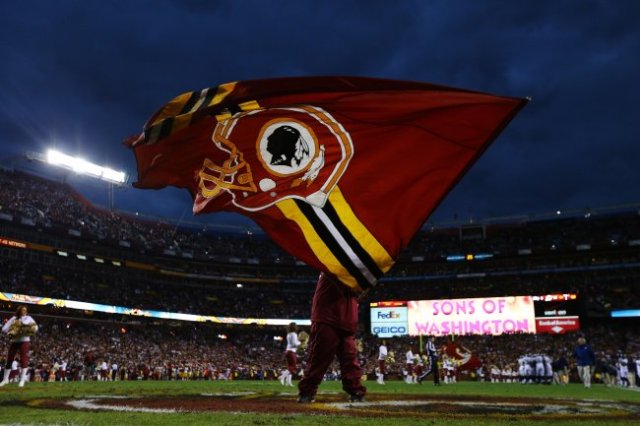
It’s one of the NFL’s bigger rivalries, the Cowboys vs. the Redskins. And intentional or not, Sunday’s game occurs during Columbus Day weekend, deepening the meaning of a fresh conflict about whether “Redskins” slurs Indians, their leaders say.

More than 500 years after Christopher Columbus’ encounter with the natives of the Americas, any enduring uneasiness between Indians and mainstream society is exemplified by the controversy over the Washington Redskins name, which took a new turn last week when President Obama spoke of “legitimate concerns” that the mascot is racist, some Indian leaders say.

Team owners strongly dispute any racism behind the mascot and won’t change it, saying the Redskins name honors “where we came from, who we are.”

But many Native Americans contend it’s incredulous that a major sports team in the nation’s capital fails to see the word’s offensiveness, especially in a game Sunday whose rival mascots conjure up the bygone real bloodshed between cowboys and Indians. Some news outlets and sports writers agree and aren’t printing “Redskin” in their stories about the NFL team.

“After 500 years, it’s pretty unbelievable that this issue is at the forefront right now,” said Jason Begay, a Navajo who’s an assistant professor and director of the Native American Journalism Project at the University of Montana. “Even in the last 50 years (of the civil rights movement), we learned so much. It’s just ridiculous that this is an issue.”

The NFL team disagrees. In response, the Oneida Indian Nation of New York began airing this weekend a radio ad protesting the Redskins mascot in the Dallas Cowboys’ hometown. The ad, entitled “Bipartisan,” quotes how Obama, a Democrat, and Rep. Tom Cole, a Republican leader in the House, disapprove of the Redskins name.

Washington team owner Dan Snyder stepped up his defense of the moniker this month. Last spring, he told USA Today he will “never” change the name.

“Our fans sing ‘Hail to the Redskins’ in celebration at every Redskins game. They speak proudly of ‘Redskins Nation’ in honor of a sports team they love,” Snyder wrote in a letter to fans.

“After 81 years, the team name ‘Redskins’ continues to hold the memories and meaning of where we came from, who we are, and who we want to be in the years to come,” he continued.

“I respect the feelings of those who are offended by the team name. But I hope such individuals also try to respect what the name means, not only for all of us in the extended Washington Redskins family, but among Native Americans too,” Snyder said, citing several polls conducted in recent years that show that a majority of people do not want the name changed.

But American Indians like Begay worry about the normalization of an epithet. He’s also vice president of the Native American Journalists Association, which launched last month a media resource page on its website about offensive Native American mascots in U.S. sports.

“We’re on the verge of laying back and letting this name run rampant when we can actually make a difference, which is what we all should be striving for,” Begay said. “I’m glad to see there are so many organizations like NAJA and the (U.S.) President who are standing against it.”

Obama said last week that if he were the team’s owner, he would “think about changing it,” referring to the mascot.

Obama added that “I don’t know whether our attachment to a particular name should override the real, legitimate concerns that people have about these things.” The ad also airs a quote by Cole saying “the name is just simply inappropriate. It is offensive to a lot of people.”

The political leaders’ remarks are repeated in the radio ad advanced by the Oneida Indian Nation and its leader Ray Halbritter, who’s also CEO of Oneida Nation Enterprises, which operates a casino and other businesses.

Halbritter acknowledged his tribe’s “Change the Mascot” campaign faces an uphill struggle. He refers to the mascot as “the R-word,” without explicitly stating it.

“Well, history is littered with people who have vowed never to change something — slavery, immigration, women’s rights — so we think one thing that’s really great about this country is when many people speak out, change can happen,” Halbritter said.

When asked about other team mascots such as the Atlanta Braves, Cleveland Indians, Kansas City Chiefs and Chicago Blackhawks, Halbritter cited how “redskin” is defined in the Merriam-Webster Unabridged online dictionary as “usually offensive.”

“Let’s be clear. The name, the R word, is defined in the dictionary as an offensive term. It’s a racial epithet. It’s a racial slur. I think there is a broader discussion to be had about using mascots generally and the damage it does to people and their self-identity. But certainly there’s no gray area on this issue,” he said.

Halbritter asserted the word was born out of hatred — and referred to the long, ugly history between the native people of the Americas and the colonizers from Europe who followed Columbus.

“Its origin is hated, use is hated, it was the name our people — that was used against our people when we were forced off our lands at gunpoint. It was a name that was used when our children were forced out of our homes and into boarding schools,” he said. “So, it has a sordid history. And it’s time for a change, and we hope that — and what’s great is when enough people do recognize that, change will come.”

Fans are sharply divided about the issue.

A non-scientific online poll by the Washington Post shows 43% saying the team should change its name. But 57% say no, keep it. One respondent said the term is “a racist holdover from another day, a time when Indians were depicted as violent, ignorant, savages (by) whites (who largely were equally violent, ignorant and savage).”

But another respondent referred to political correctness and said: “The liberal PC society has gotten out of control, if you don’t like the teams name THEN DON’T WATCH THEM…!”

Redskins attorney Lanny Davis said the mascot is “not about race, not about disrespect.”

At games, he joins fans in singing “Hail to the Redskins” because “it’s a song of honor, it’s a song of tribute.”

http://www.cnn.com/2013/10/12/us/redskins-controversy/index.html?hpt=hp_c2

Tribe wants Washington Redskins football team to change name

redskins

President Barack Obama has weighed in. The pro football commissioner, has too. And now, a Native American tribe hopes recent attention to controversy surrounding the name of Washington’s National Football League team will provide the momentum needed to get it changed.

As NFL executives arrived in the nation’s capital for their annual fall meeting on Monday, the Oneida Indian Nation held a symposium in town to discuss their campaign to find a new name for the Washington Redskins after 80 years.

“We are asking the NFL to stop using a racial slur as the name of Washington’s football team,” said Oneida Indian Nation Representative Ray Halbritter.

The “Change the Mascot” campaign launched last month with a string of radio ads airing in Washington and cities where the Redskins play this season.

The NFL executives were invited to the symposium, but Halbritter said none attended.

In an interview with the Associated Press last week, Obama said if he were the owner of the Redskins and he knew the name was “offending a sizable group of people,” then he would “think about changing it.”

Halbritter began his remarks by thanking the president for weighing in.

“As the first sitting president to speak out against the Washington team name, President Obama’s comments over the weekend were nothing less than historic,” Halbritter said. “Isn’t that the real issue? No matter what the history of something is, if it’s offending people, then it’s time to change it. And this is a great time to do it.”

A Washington Post poll from June indicated that two-thirds of people who live in the D.C. metropolitan area didn’t want the Redskins to change their name, but more than eight in 10 said it wouldn’t make much of a difference to them if the name were changed.

Last month, NFL Commissioner Roger Goodell, who had previously expressed support for the team mascot, changed his tone on the “The LaVar Arrington Show with Chad Dukes” on 106.7 The Fan in Washington.

“I want all of us to go out and make sure we’re listening to our fans, listening to people of a different view, and making sure that we continue to do what’s right to make sure that team represents the strong tradition and history that it has for so many years,” Goodell said.

The NFL confirmed on Monday that it would meet with Oneida leaders.

But Redskins owner Dan Snyder has steadfastly refused to consider it, telling USA Today last spring that he will “NEVER” change his team’s name, even if they lose an ongoing federal trademark lawsuit that would stop the NFL team from exclusively profiting from the Redskins name.

In addition to the federal trademark lawsuit, a group of U.S. lawmakers drafted a bill last spring to cancel trademark registrations that use the name “Redskins.” Two of them, Democrats Rep. Eleanor Holmes Norton of the District of Columbia, and Rep. Betty McCollum of Minnesota attended Monday’s forum to voice their support.

http://www.cnn.com/2013/10/07/us/washington-redskins-name/index.html?hpt=hp_bn1

Researcher decodes prairie dog language, discovers they’ve been talking about us

prairie_dog_language_jpg_662x0_q100_crop-scale

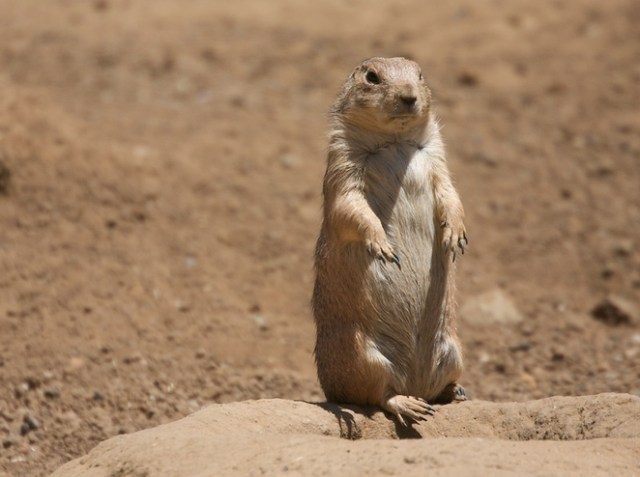
You might not think it to look at them, but prairie dogs and humans actually share an important commonality — and it’s not just their complex social structures, or their habit of standing up on two feet (aww, like people). As it turns out, prairie dogs actually have one of the most sophisticated forms of vocal communication in the natural world, really not so unlike our own.

After more than 25 years of studying the calls of prairie dog in the field, one researcher managed to decode just what these animals are saying. And the results show that praire dogs aren’t only extremely effective communicators, they also pay close attention to detail.

According to Dr. Con Slobodchikoff, who turned his vocalization analysis on the Gunnison’s prairie dog of Arizona and New Mexico, the chirps these animals use as ‘alert calls’ are actually word-like packages of information to share with the rest of the colony. Amazingly, these unique sounds were found to both identify specific threats by species, such as hawks and coyotes, and to point out descriptive information about their appearance.

And, when they’re talking about humans, that might not always be flattering.

“For example, a human alarm call not only contains information about the intruder being a human, but also contains information about the size, shape (thin or fat), and color of clothes the human is wearing,” says Dr. Slobodchikoff.

“When we do an experiment where the same person walks out into a prairie dog colony wearing different colored t-shirts at different times, the prairie dogs will have alarm calls that contain the same description of the person’s size and shape, but will vary in their description of the color.”

While there’s still much to learn about how other animals use organized vocalizations to communicate, Dr. Slobodchikoff has been a pioneer in the field — discovering complex language systems in a variety of other species as well. And with that, perhaps we humans will begin to change our perspective on our place in the world, knowing now that ours is not the only voice to be heard.

http://www.treehugger.com/natural-sciences/researcher-decodes-praire-dog-language-discovers-theyve-been-calling-people-fat.html

President Barack Obama Weighs in on Washington Redskins’ Team Name Debate

redskins

President Barack Obama has joined the ongoing debate surrounding the NFL’s Washington Redskins and their nickname, according to the Associated Press via ESPN.

In a recent interview, President Obama admitted that nicknames like the “Redskins” can offend large groups of people. He also conceded that he doesn’t believe fans of Washington’s football team are out to mock or offend Native Americans.

Essentially, Obama didn’t pick a side, instead stating the facts that must be taken into consideration:

I don’t know whether our attachment to a particular name should override the real legitimate concerns that people have about these things. I don’t want to detract from the wonderful Redskins fans that are here. They love their team and rightly so.

He also pointed out that American Indians “feel pretty strongly” about team names that play off negative stereotypes or cast the group in an unfavorable light.

Despite being president, Obama has no say in whether the Redskins change their nickname. The decision is ultimately up to team owner Daniel Snyder, who told USA Today back in May that the franchise “will never” change its name.

NFL commissioner Roger Goodell has weighed in as well, originally defending the nickname in a response to a letter from Congress back in June. In a radio interview on 106.7 The Fan in Washington last month, Goodell changed his tune, admitting that “if one person is offended, we have to listen.”

President Barack Obama Weighs in on Washington Redskins' Nickname Debate

Death of an un-loved one

death

The obituary for Marianne Theresa Johnson-Reddick that appeared in the Reno Gazette-Journal on September 10 started in typical fashion: She was born on January 4, 1935 and died on August 30, 2013. But the announcement, written by two of her adult children, quickly took a grim turn.

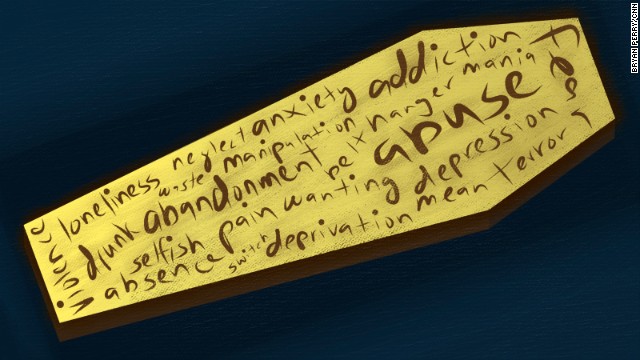
While most death notices include a short, factual and sometimes cheery biography of the deceased, this one included a laundry list of Johnson-Reddick’s alleged parental failings and character flaws.

“She is survived by her 6 of 8 children whom she spent her lifetime torturing in every way possible,” the obituary read. “While she neglected and abused her small children, she refused to allow anyone else to care or show compassion towards them.”

The obit was submitted via the paper’s self-service online portal, according to publisher John Maher, and it quickly went viral. Patrick and Katherine Reddick co-wrote the scathing remembrance, and Patrick has gone on to tell publications he sang the Wizard of Oz’s “Ding-Dong! The Witch is Dead” when he learned of his mother’s passing.

The cemetery isn’t always an easy place to bury the hatchet, especially when survivors remember the deceased in an adversarial light. What do “My condolences” or “I’m sorry for your loss” mean to a person who is thinking “Good riddance”? And how do resentful survivors avoid speaking ill of the dead?

Grief experts say people affected by the death of a less-than-loved one often have much more unfinished emotional business, and that business starts with forgiveness of a sort.

The Reddick siblings claimed in the obituary that their motive was “to stimulate a national movement” against child abuse in the United States. “Her surviving children will now live the rest of their lives with the peace of knowing their nightmare finally has some form of closure,” they wrote.

Russell Friedman, executive director of the Grief Recovery Institute, said even the death of a toxic person can’t bring the closure the Reddick siblings mention when grief is unresolved.

“Grieving people tend to create larger-than-life pictures in which they enshrine or bedevil the person who died,” he said.

Friedman says rehashing tough memories in an obituary like Johnson-Reddick’s keeps survivors mired in pain and grief.

“When they’re telling the story of their pain, there’s no recovery. Where is the completion,” he asked. “They’re just confirming the pain that’s built in; the pain becomes their identity. The pain is not freedom; it’s jail.”

Some survivors of heinous abuse agree that holding onto hatred for the dead and publicly shaming them will not close the book on a lifetime of hurt.

Becky Blanton knows what unresolved grief feels like. Her essay detailing alleged physical and sexual abuse at the hands of her father, titled “The Monster,” appeared in the late journalist Tim Russert’s final book “Wisdom of Our Fathers” and outlines how she came to terms with his abuse while he was on his death bed.

Blanton said the only way to overcome pain caused by an instrumental figure in one’s life is to forgive, but the definition of that word is often misunderstood.

Both Blanton and Friedman said forgiveness is about relieving oneself of resentment.

“Forgiveness isn’t about saying, ‘It’s OK,’ or that you ‘accept’ or ‘approve’ what happened,” Blanton said. “Forgiveness is the acknowledgment that what happened, happened, and that you are now ready to set down the baggage, the pain and the fear.”

“There simply is no other way,” Friedman agreed.

Blanton finds that when a person forgives they no longer take action based on feelings of revenge, anger or fear, but instead make decisions based on their own character.

“If I consider myself a good person, a generous person, but then act meanly or selfishly because someone has treated me that way, then I allow their actions to determine my character and my actions,” Blanton said.

Mothers of sex offenders share responsibility, burden of label

Friedman said that without taking the proper steps to grieve and let go, pain can become part of one’s identity.

“(Retribution) does no virtue for you. It will create the illusion that you’ve done something valuable for yourself,” Friedman said.

Resolving that pain comes down to a key phrase: “I remember the time that you did this, and I’m not going to let the memory of that event hurt me anymore.”

There are ways to describe a person of dubious character after death without blasting them in an obit, according to Andrew Meacham, the chief epilogue writer for the Tampa Bay Times.

“Just as people aren’t saintly, they aren’t completely villainous,” he said.

“You don’t have to make somebody out to be a villain, just tell the facts and people can read between the lines,” Meacham explained.

Just as he says he avoids writing biographies in which that person “never met a stranger,” had a “smile that lit up a room” and the rest of those hanky clichés that come out when somebody dies, he also avoids the opposite.

“Had I written (the Johnson-Reddick obit) as a news story, I would want to talk to somebody who knew their mom,” he said. “Not necessarily to sanitize it, but she was a human being after all.”

Meanwhile, trying to console a person who has experienced a loss is tricky — especially if the relationship was contentious. Above all, Friedman recommends being mindful of the words you use.

“I’m sorry for your loss” doesn’t work, Friedman said. “‘I’m sorry’ is a dangerous line if you didn’t know the person who died.”

Friedman suggests instead using open-ended phrases like: “I don’t even know what to say. I can’t imagine what this has been like for you.” Turn the statement into more of a question, giving the person an opening to tell you the truth if they feel up to it.

Blanton agrees.

“‘I’m sorry for your loss,’ doesn’t cut it when a person is a monster,” Blanton said. “Having someone say, ‘I’m so sorry for what he did to you. I wish someone had been there for you’ does wonders.”

Blanton sees where the Reddicks were coming from. They are trying to be heard because they might not have been able to express anger as children (or were too scared to), she said, and they’re doing the best they can with the tools they have.

Her response: “We hear you.”

http://www.cnn.com/2013/09/24/living/death-anger-reddick-obit/?iref=obnetwork

Zurich launches drive-in prostitution plan

zurich-opens-drive-in-sex-boxes

A series of wooden sheds have been constructed in Zurich, Switzerland as part of an initiative to regulate prostitution.

They look like garages or shelters but are being called by the locals ‘drive-in sex boxes’.

The idea is that men wanting to pay for sex can drive into one of the sheds having picked up a prostitute from an approved area.

Project director Michael Herzig said the boxes should improve security for sex workers.

“We’ve had a problem here which has been getting worse over the last few years, especially regarding Roma women, some of whom were being forced into prostitution. This was a degrading situation which we really had to stop.”

It is hoped the sex boxes will persuade prostitutes to sell their services away from residential areas, in a safe environment – the sheds are all equipped with alarms.

“This solution has several advantages: the support service for the women is better because we are directly here on site. The infrastructure is better. The women can come to us and use the shower and the toilets. We can talk to them without other people listening and the area is closed and observable,” said Ursula Kocher, of the Flora Dora centre for women:

The million euro project was approved by voters in Zurich last year in a referendum. The site is only open to drivers of cars and will operate from early evening until 5am each day.

http://www.euronews.com/2013/08/19/zurich-opens-drive-in-sex-boxes/

One-third of Republicans in Louisiana believe Obama was responsible for the US Government’s poor response to Hurricane Katrina

katrina

A large number of Louisiana Republicans think President Barack Obama is to blame for the federal government’s poor response to Hurricane Katrina, according to a new Public Policy Polling survey released Wednesday — despite the fact that the storm occurred three years before he took office.

The Democratic-leaning polling firm, which provided its results to Talking Points Memo, found that 29 percent of Louisiana Republicans said Obama was responsible for the Katrina response. Twenty-eight percent put the blame on President George W. Bush, whose administration did in fact oversee the federal response to Katrina. Nearly half (44 percent) of the Louisiana Republicans polled didn’t know who to blame.

Bush was heavily criticized at the time for the government’s response to Katrina, a storm that caused 1,833 fatalities, damaged an estimated $81 billion in property, and ranks among the five deadliest hurricanes in United States history. He remained on vacation in Texas as the hurricane rocked the Gulf Coast, before belatedly cutting his trip short and returning to Washington. An infamous photo of Bush peering out the window of Air Force One at the wreckage was also attacked as insensitive, and the former president himself later acknowledged the photo was a “huge mistake” in a 2010 interview.

Bush’s approval ratings plunged in the months following the disaster, and his administration was dogged by suggestions that race was a factor in its response efforts.

During a live concert for hurricane relief, rapper Kanye West said, “George Bush doesn’t care about black people,” a moment Bush later said was the “most disgusting moment” of his presidency. Condoleezza Rice, who served as Bush’s secretary of state, recalled in her memoir that there was clearly “a race problem” during Katrina, although she disputed allegations that Bush or his administration were racist.

http://www.huffingtonpost.com/2013/08/21/obama-hurricane-katrina_n_3790612.html

Congressman Eni F.H. Faleomavaega: “It’s Time to Change the Redskins’ Racist Name”

Washington-Redskins

It is time that the National Football League and NFL Commissioner Roger Goodell face the reality that the continued use of the word “redskin” is unacceptable. It is a racist, derogatory term and patently offensive to Native Americans. The Native American community has spent millions of dollars over the last two decades trying earnestly to fight the racism that is perpetuated by this slur. The fact that the NFL and Commissioner Goodell continue to deny this is a shameful testament of the mistreatment of Native Americans for so many years. It is quite obvious that once the American public understands why the word “redskins” is so offensive, they will know that the word should never be used again.

The origin of the term “Redskins” is commonly attributed to the historical practice of trading Native American Indian scalps and body parts as bounties and trophies. For example, in 1749, the British bounty on the Mi’kmaq Nation of what is now Maine and Nova Scotia, was a straightforward “ten Guineas for every Indian Micmac taken or killed, to be paid upon producing such Savage taken or his scalp.”

Just as devastating was the Phips Proclamation, issued in 1755 by Spencer Phips, Lieutenant Governor and Commander in Chief of the Massachusetts Bay Province, who called for the wholesale extermination of the Penobscot Indian Nation.

By vote of the General Court of the Province, settlers were paid out of the public treasury for killing and scalping the Penobscot people. The bounty for a male Penobscot Indian above the age of 12 was 50 pounds, and his scalp was worth 40 pounds. The bounty for a female Penobscot Indian of any age and for males under the age of 12 was 25 pounds, while their scalps were worth 20 pounds. These scalps were called “redskins.”

The question is quite simple: suppose that a “redskin” scalp that was brought for payment was your mother, your wife, your daughter, your father, your husband, or your son? The fact is Native Americans are human beings, not animals.

The current Chairman and Chief of the Penobscot Nation, Chief Kirk Francis, recently declared in a joint statement that “redskins” is “not just a racial slur or a derogatory term,” but a painful “reminder of one of the most gruesome acts of . . . ethnic cleansing ever committed against the Penobscot people.” The hunting and killing of Penobscot Indians, as stated by Chief Francis, was “a most despicable and disgraceful act of genocide.”

Recently, I and nine Members of Congress explained the violent history and disparaging nature of the term “redskins” in a letter to Mr. Dan Snyder, owner of the Washington football franchise. Similar letters were sent to Mr. Frederick Smith, President and CEO of FedEx (a key sponsor for the franchise), and to Mr. Roger Goodell, Commissioner of the National Football League.

As of today, Mr. Snyder has yet to respond. Mr. Smith ignored our letter as well, opting instead to have a staff member cite contractual obligations as FedEx’s reason for its silence on the subject.

Mr. Goodell, however, in a dismissive manner, declared that the team’s name “is a unifying force that stands for strength, courage, pride and respect.” In other words, the NFL is telling everyone—Native Americans included—that they cannot be offended because the NFL means no offense. Essentially, Mr. Goodell attempts to wash away the stain from a history of persecution against Native American peoples by spreading twisted and false information concerning the use of the word “redskins” by one of the NFL’s richest franchises.

Mr. Goodell’s response is indicative of the Washington football franchise’s own racist and bigoted beginnings. The team’s founder, George Preston Marshall, is identified by historians as the driving force behind the effort to prevent African Americans from playing in the NFL. And once African Americans were allowed to play in 1946, Marshall was the last club owner to field an African American player – a move he reluctantly made some 14 years later in 1962. It should be noted that Secretary of the Interior Stewart Udall and U.S. Attorney General Robert F. Kennedy presented Marshall with an ultimatum – unless Marshall signed an African American player, the government would revoke his franchise’s 30-year lease on the use of the D.C. Stadium.

Congressman Tom Cole, the Representative from Oklahoma, Co-Chair of the Congressional Native American Caucus, and a member of the Chikasaw Nation, states: “This is the 21st century. This is the capital of political correctness on the planet. It is very, very, very offensive. This isn’t like warriors or chiefs. It’s not a term of respect, and it’s needlessly offensive to a large part of our population. They just don’t happen to live around Washington, D.C.”

Congresswoman Betty McCollum, the Representative from Minnesota and Co-Chair of the Congressional Native American Caucus, states that Mr. Goodell’s letter “is another attempt to justify a racial slur on behalf of [Mr.] Dan Snyder,” owner of the Washington franchise, “and other NFL owners who appear to be only concerned with earning ever larger profits, even if it means exploiting a racist stereotype of Native Americans. For the head of a multi-billion dollar sports league to embrace the twisted logic that ‘[r]edskin’ actually ‘stands for strength, courage, pride, and respect’ is a statement of absurdity.”

Congresswoman Eleanor Holmes Norton, the Representative from the District of Columbia, states that Mr. Snyder “is a man who has shown sensibilities based on his own ethnic identity, [yet] who refuses to recognize the sensibilities of American Indians.”

Recently, in an interview with USA Today Sports, Mr. Snyder defiantly stated, “We’ll never change the name. It’s that simple. NEVER – you can use caps.” Mr. Snyder’s statement is totally inconsistent with the NFL’s diversity policy, which states:

Diversity is critically important to the NFL. It is a cultural and organizational imperative about dignity, respect, inclusion and opportunity . . . The overall objective of the [NFL’s] diversity effort is to create a culturally progressive and socially reflective organization that represents, supports and celebrates diversity at all levels.

It is critically important that the NFL promote its Commitment to Diversity, and uphold its moral responsibility to disavow the usage of racial slurs. Just as important is the moral responsibility of the NFL’s 31 other football club owners to collectively have the necessary courage to stand up and speak out against the use of this derogatory term. Mr. Snyder, more than anyone else in the NFL, should display greater sensitivity and appreciation for a people who have been maligned and mistreated for hundreds of years.

Ms. Suzan Harjo, President of the Morning Star Institute – a national Native American rights organization – and a member of the Cheyenne and Hodulgee Muscogee tribes, summed it up best when she stated: “[Redskins] is the worst thing in the English language you can be called if you are a native person.” This is not just a statement, but a direct invitation for Mr. Snyder and the NFL to do the right thing. I challenge Mr. Snyder to be reasonable, and to realize the harmful legacy that his franchise’s name perpetuates.

In an attempt to correct the long-standing usage of the term “redskins,” the bill H.R. 1278 entitled, “The Non-Disparagement of Native American Persons or Peoples in Trademark Registration Act of 2013” was introduced. This bill would cancel the federal registrations of trademarks using the word “redskin” in reference to Native Americans. The Trademark Act of 1946 – more commonly known as the Lanham Act – requires that the U.S. Patent and Trademark Office (PTO) not register any trademark that “[c]onsists of or comprises . . . matter which may disparage . . . persons, living or dead…or bring them into contempt, or disrepute.” 15 U.S.C. §1502(a).

Native American tribes have a treaty, trust and special relationship with the United States. Because of the duty of care owed to the Native American people by the federal government, it is incumbent upon the federal government to ensure that the Lanham Act is strictly enforced in order to safeguard Indian tribes and citizens from racially disparaging federal trademarks.

Accordingly, the Patent and Trademark Office has rejected applications submitted by the Washington franchise for trademarks which proposed to use the term “redskins” – three times in 1996 and once in 2002. The PTO denied the applications on grounds that “redskins” is a racial slur that disparages Native Americans.

In 1992, seven prominent Native American leaders petitioned the Trademark Trial and Appeal Board (TTAB) to cancel the federal registrations for six trademarks using “redskins.” The TTAB in 1999 ruled that the term “redskins” may, in fact, disparage American Indians, and cancelled the registrations. On appeal, a federal court reversed the TTAB’s decision, holding that the petitioners waited too long after coming of age to file their petition. A new group of young Native Americans petitioned the TTAB to cancel the registrations of the offending trademarks in 2006. The TTAB held a hearing on March 7, 2013. A final decision is pending.

H.R. 1278 is supported by a number of major Native American organizations, including the National Congress of American Indians (NCAI) – the oldest, largest and most representative American Indian and Alaska Native organization serving tribal governments and communities. Mr. Jefferson Keel, a member of the Chikasaw Nation and President of NCAI, stated that our efforts as Members of Congress will hopefully accomplish “what Native American people, nations, and organizations have tried to do in the courts for almost twenty years – end the racist epithet that has served as the [name] of the Washington’s pro football franchise for far too long.”

The Native American Rights Fund (NARF) – the oldest and largest nonprofit law firm dedicated to asserting and defending the rights of Indian tribes, organizations, and individuals nationwide – also supports the call to change the Washington franchise’s racist name. NARF recently issued a statement describing our efforts as “a clear signal that some [M]embers of Congress do not take anti-Native stereotyping and discrimination lightly. These Representatives now join Native American nations, organizations and people who have lost patience with the intransigence of the Washington pro football franchise in holding on to the indefensible – a racial epithet masquerading as a team name.”

Despite the Native American community’s best efforts before administrative agencies and the courts, the term “redskins” remains a federally registered trademark. It has been well over twenty years and this matter is still before the courts. This injustice is the result of negligence and a cavalier attitude demonstrated by an administrative agency charged with the responsibility of not allowing racist or derogatory terms to be registered as trademarks. Since the federal government made the mistake in registering the disparaging trademark, it is now up to Congress to correct it.

Congressman Eni F.H. Faleomavaega has represented the territory of American Samoa in the United States Congress since 1989. Faleomavaega is a member of the House Committee on Natural Resources, and serves on the Subcommittee on Indian and Alaska Native Affairs. Faleomavaega is also a member of the Congressional Native American Caucus.

http://indiancountrytodaymedianetwork.com/2013/07/30/its-time-change-redskins-racist-name

Monogamy may have evolved to keep baby-killers away

monogamy

Social monogamy – when a male and female of the species stick together for the long term, although may mate with others – is rare in mammals generally. However, it occurs in over a quarter of primate species, including humans, gibbons and many New World monkeys, such as titis.

To investigate what originally drove us to establish such pair bonds, a team led by Kit Opie of University College London and Susanne Shultz from the University of Manchester, UK, gathered data on the mating behaviour of 230 primate species. They selected behavioural traits associated with several possible evolutionary drivers of monogamy, including the risk of infanticide, the need for paternal care and the potential for guarding female mates.

Using data on the genetic relationships between the species, the team ran millions of computer simulations of the evolution of these traits to work out which came first.

All three were linked to the evolution of monogamy but only behaviours associated with infanticide actually preceded it, suggesting that this was the driver. Suckling infants are most likely to be killed by unrelated males, in order to bring the mother back into ovulation.

With pair-bonding in place, not only would a mother have a male to help protect the infant from marauding males, but there would then be the opportunity for the male to help care for it by providing extra resources. This means the infant can be weaned earlier, again reducing the chance of it being killed.

“Until recently, reconstructing how behaviour evolves has been very tricky as there are few behavioural traces in the fossil record. The statistical approach we have used allows us to bring the fossils to life and to understand the factors that have led to the evolution of monogamy in humans and other primates,” says Shultz.

Carel van Schaik, a primatologist at the University of Zurich in Switzerland says the results are solid but questions whether they can be extrapolated to humans. He says evidence suggests that humans were never really monogamous and that the monogamy we see today in many cultures is socially imposed.

Shultz counters that there is fossil evidence pointing to monogamy in australopithecines, the hominin genus from which modern humans descended.

“Although we suggest that infanticide may help explain the evolution of monogamy in humans, we do not argue that it is the only factor nor that monogamy is universal,” Shultz says. “I would suggest that where infanticide risk is high, as it would be with our ancestors, having a father provide protection and care would facilitate the evolution of the modern human extended childhood.”

Journal reference: PNAS, DOI: 10.1073/pnas.1307903110