
Delftia acidovorans protects itself by turning its environment into gold

gold

Mythical King Midas was ultimately doomed because everything he touched turned to gold. Now, the reverse has been found in bacteria that owe their survival to a natural Midas touch.

Delftia acidovorans lives in sticky biofilms that form on top of gold deposits, but exposure to dissolved gold ions can kill it. That’s because although metallic gold is unreactive, the ions are toxic.

To protect itself, the bacterium has evolved a chemical that detoxifies gold ions by turning them into harmless gold nanoparticles. These accumulate safely outside the bacterial cells.

“This could have potential for gold extraction,” says Nathan Magarvey of McMaster University in Hamilton, Ontario, who led the team that uncovered the bugs’ protective trick. “You could use the bug, or the molecules they secrete.”

He says the discovery could be used to dissolve gold out of water carrying it, or to design sensors that would identify gold-rich streams and rivers.

The protective chemical is a protein dubbed delftibactin A. The bugs secrete it into the surroundings when they sense gold ions, and it chemically changes the ions into particles of gold 25 to 50 nanometres across. The particles accumulate wherever the bugs grow, creating patches of gold.

But don’t go scanning streams for golden shimmers: the nanoparticle patches do not reflect light in the same way as bigger chunks of the metal – giving them a deep purple colour.

When Magarvey deliberately snipped out the gene that makes delftibactin A, the bacteria died or struggled to survive exposure to gold chloride. Adding the protein to the petri dish rescued them.

The bacterium Magarvey investigated is one of two species that thrive on gold, both identified a decade or so ago by Frank Reith of the University of Adelaide in Australia. In 2009 Reith discovered that the other species, Cupriavidus metallidurans, survives using the slightly riskier strategy of changing gold ions into gold inside its cells.

“If delftibactin is selective for gold, it might be useful for gold recovery or as a biosensor,” says Reith. “But how much dissolved gold is out there is difficult to say.”

Journal reference: Nature Chemical Biology, DOI: 10.1038/NCHEMBIO.1179

http://www.newscientist.com/article/dn23129-bug-protects-itself-by-turning-its-environment-to-gold.html?cmpid=RSS|NSNS|2012-GLOBAL|online-news
Scientists create artifical brain with 2.3 million simulated neurons

aritificial brain

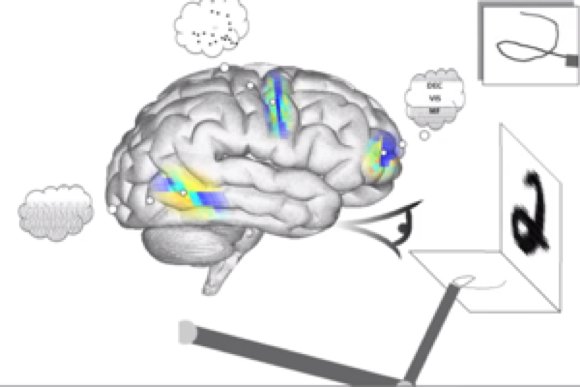
Another computer is setting its wits to perform human tasks. But this computer is different. Instead of the tour de force processing of Deep Blue or Watson’s four terabytes of facts of questionable utility, Spaun attempts to play by the same rules as the human brain to figure things out. Instead of the logical elegance of a CPU, Spaun’s computations are performed by 2.3 million simulated neurons configured in networks that resemble some of the brain’s own networks. It was given a series of tasks and performed pretty well, taking a significant step toward the creation of a simulated brain.

Spaun stands for Semantic Pointer Architecture: Unified Network. It was given 6 different tasks that tested its ability to recognize digits, recall from memory, add numbers and complete patterns. Its cognitive network simulated the prefrontal cortex to handle working memory and the basal ganglia and thalamus to control movements. Like a human, Spaun can view an image and then give a motor response; that is, it is presented images that it sees through a camera and then gives a response by drawing with a robotic arm.

And its performance was similar to that of a human brain. For example, the simplest task, image recognition, Spaun was shown various numbers and asked to draw what it sees. It got 94 percent of the numbers correct. In a working memory task, however, it didn’t do as well. It was shown a series of random numbers and then asked to draw them in order. Like us with human brains, Spaun found the pattern recognition task easy, the working memory task not quite as easy.

The important thing here is not how well Spaun performed on the tasks – your average computer could find ways to perform much better than Spaun. But what’s important is that, in Spaun’s case, the task computations were carried out solely by the 2.3 million artificial neurons spiking in the way real neurons spike to carry information from one neuron to another. The visual image, for example, was processed hierarchically, with multiple levels of neurons successively extracting more complex information, just as the brain’s visual system does. Similarly, the motor response mimicked the brain’s strategy of combining many simple movements to produce an optimal, single movement while drawing.

Chris Eliasmith, from the University of Waterlook in Ontario, Canada and lead author of the study is happy with his cognitive creation. “It’s not as smart as monkeys when it comes to categorization,” he told CNN, “but it’s actually smarter than monkeys when it comes to recognizing syntactic patterns, structured patterns in the input, that monkeys won’t recognize.”

Watch Spaun work through its tasks in the following video.

One thing Spaun can’t do is perform tasks in realtime. Every second you saw Spaun performing tasks in the video actually requires 2.5 hours of numbers crunching by its artificial brain. The researchers hope to one day have it perform in realtime.

It’s important to note that Spaun isn’t actually learning anything by performing these tasks. Its neural nets are hardwired and are incapable of the modifications that real neurons undergo when we learn. But producing complex behavior from a simulated neuronal network still represents an important initial step toward building an artificial brain. Christian Machens, a neuroscientist at the Champalimaud Neuroscience Programme in Lisbon and was not involved in the study, writes in Science that the strategy for building a simulated brain is “to not simply incorporate the largest number of neurons or the greatest amount of detail, but to reproduce the largest amount of functionality and behavior.”

We’re still a long way from artificial intelligence that is sentient and self-aware. And there’s no telling if the robots of the future will have brains that look like ours or if entirely different solutions will be used to produce complex behavior. Whatever it looks like, Spaun is a noble step in the right direction.

Scientists Create Artificial Brain With 2.3 Million Simulated Neurons

Ontario woman discovers 80,000 bees in her ceiling

A homeowner in southern Ontario says she knew she had a “sweet mess” on her  hands when a crack in the ceiling started oozing honey.

Loretta Yates soon discovered the 1 1/2-storey house she shares with her  husband and 22-month-old son was also home to about 80,000 bees nesting in the  first-floor ceiling.

She says her insurance company wouldn’t cover the damage to her house in  Varney, just outside Mount Forest, and a pest control company couldn’t promise  to get the bugs out for good.

That’s when she called beekeeper David Schuit, who took down the ceiling and  scraped the honeycomb loose, catching at least one queen bee and recovering more  than 100 kilograms of honey.

Schuit says there was so much dripping down in the kitchen, a lightbulb blew  because it was half-full of honey.

Bees and wasps have been nesting in the house for about four years, says  Yates, but she never realized there were so many.

“I guess with the cracked ceiling in the kitchen and the honey dripping on me — that was (the) time to get help,” she said Monday.

It’s expected some of the honey will be made into candles.

Read more: http://www.theprovince.com/technology/Honey+oozing+from+ceiling+leads+discovery+bees+inside+Ontario+home/7013333/story.html#ixzz22Olc7qQV